
Knee Arthroscopy
Knee arthroscopy is a minimally invasive surgical method used for diagnosis and treatment of problems within the knee joint. Structures inside the joint are visualised and necessary procedures are carried out using a camera and specialised surgical instruments inserted through small incisions.
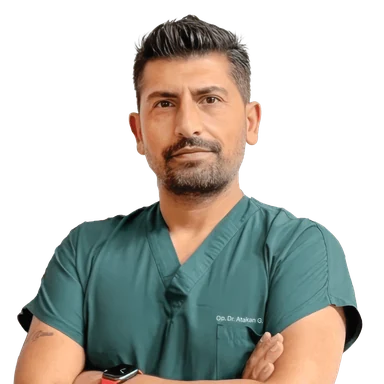
Dr. Atakan Güvendiren
Orthopaedics and Traumatology · Istanbul
▶ What is Sports Surgery?
{ AI · initial information }
onlineLet's discuss closed surgery
AI answers do not replace a medical diagnosis.
Knee arthroscopy is a minimally invasive surgical method that allows evaluation and treatment of problems within the knee joint using a camera and specialised surgical instruments inserted through small incisions.
Knee arthroscopy is a surgical method that allows evaluation of the inside of the knee joint using a camera and surgical instruments inserted through small incisions, and when appropriate, provides treatment options. Its suitability is determined by the cause of the complaint and the procedure planned; not every knee pain requires arthroscopy.
Summary: Knee arthroscopy is a surgical method used to evaluate and treat certain intra-articular problems. It may be considered in suitable patients with meniscal tears, anterior cruciate ligament injuries or loose bodies. Non-surgical options appropriate for the individual are prioritised first; their inadequacy alone does not justify surgery. Arthroscopic irrigation or cleaning of worn tissue is not recommended in osteoarthritis. Recovery varies depending on the procedure performed; awareness of signs of infection, blood clots and other complications is necessary.
Is Knee Pain Limiting Your Daily Life?
If knee pain makes walking, using stairs or daily tasks difficult, the cause should first be evaluated. Locking, swelling or feelings of instability accompanying the pain may stem from problems in different structures. Treatment decisions are individualised, taking into account the impact of symptoms on daily living, examination findings and, where necessary, imaging results.
The following information will guide your assessment:
- Whether the pain started after an injury or developed over time.
- Whether there is locking, catching or a feeling of giving way in the knee.
- When swelling started and how it has changed.
- Response to treatments previously tried.
- Movements that cannot be done or are difficult to perform in daily life.
If symptoms persist, re-evaluation may be needed; however, this does not automatically mean surgery is required. The aim is to ensure that the source of the pain and the proposed treatment are compatible.
What is Knee Arthroscopy?
Knee arthroscopy is a procedure in which the inside of the joint is viewed through a camera called an arthroscope and surgical instruments are used to perform necessary interventions. The use of small incisions does not mean that the scope of the surgical work inside the joint is also small. Meniscus repair and free body removal can create different healing and protective requirements; the process is determined according to the work performed.
The camera image helps the surgeon examine the menisci, joint cartilage, cruciate ligaments and synovial tissue. Identified problems can be addressed during the same procedure.
Arthroscopy can serve both diagnostic and therapeutic purposes. However, examination and imaging findings remain important in the diagnostic process. Directly viewing the joint interior does not mean that the cause of every pain will be definitively established or that all pain will be relieved.
Knee Arthroscopy and Comfortable Movement
The aim of knee arthroscopy is to contribute to pain reduction and improvement in movement function when an appropriate surgical target is identified. The extent to which this goal is achieved varies depending on the type of damage, accompanying joint problems and rehabilitation. Being a procedure performed with small incisions does not guarantee pain-free recovery or rapid return to daily activities.
Expectations should be clarified before surgery:
- What problem the intervention is aimed at.
- Which symptoms are expected to improve.
- How accompanying cartilage wear can be limited in its effects.
- What restrictions may be needed when returning to daily activities.
Goals such as walking, using stairs or playing sports differ from each other. Improvement in daily tasks may not indicate that the knee is ready for sports loads. Outcome assessment is based on the patient's needs and the procedure performed.
Knee Joint Problems Can Be Managed with Treatment
In knee joint problems, treatment may include exercise, physiotherapy, medication or selected injection therapies, depending on the source of the complaint. Surgery is considered when non-surgical options suitable for the individual are insufficient or not appropriate, and a manageable problem is present. Not every patient needs to try all options; arthroscopy is not appropriate for every persistent pain.
Non-surgical approach components have different aims:
- Exercise and physiotherapy: Aim to support range of motion, muscle strength and daily function.
- Medication therapy: Is planned taking into account health status and other medications being used.
- Corticosteroid injection: May be considered in selected cases for short-term relief.
- Hyaluronic acid injection: Guideline support is limited; it should not be considered equivalent to other injections.
Arthroscopic lavage or debridement is not recommended for osteoarthritis. Debridement involves surgical cleaning or smoothing of tissues. Failure to benefit sufficiently from exercise or medication does not make arthroscopy appropriate for cleaning wear caused by bony changes.
Why is Knee Arthroscopy Performed?
Knee arthroscopy may be considered for specific meniscus tears, cruciate ligament injuries or intra-articular free bodies where intervention is possible. The decision is based on whether imaging findings are related to the patient's symptoms. Limited cartilage damage in one area should be distinguished from widespread wear due to osteoarthritis; persisting pain alone should not be considered sufficient surgical justification.
Key distinctions in suitability assessment are as follows:
| Problem | Arthroscopy assessment |
|---|---|
| Torn meniscus | Repair or limited tissue management may be considered depending on the characteristics of the tear. |
| Cruciate ligament injury | Intervention on the ligament may be considered based on functional loss and individual needs. |
| Intra-articular free body | Removal may be considered after assessment of its relationship to symptoms. |
| Focal cartilage damage | Damage in a specific area is assessed separately from widespread wear. |
| Widespread wear due to osteoarthritis | Arthroscopic lavage or debridement is not recommended. |
Procedures on synovial tissues may also be considered in certain situations. Not every finding requires surgery; the purpose and limitations of intervention should be explained.
Knee Joint Anatomy: Structures Targeted by Arthroscopy
In the knee joint, cartilage, menisci, cruciate ligaments and synovial membrane contribute to sustained movement. Arthroscopy allows evaluation of these intra-articular structures. The collateral ligaments lie outside the joint; they should not be described as primary structures directly assessed by arthroscopy in the same way as the cruciate ligaments. Collateral ligament injuries are evaluated by examination and, if necessary, MRI.
The duties of these structures and assessment limitations can be summarised as follows:
- Joint cartilage: Contributes to smooth movement of joint surfaces. Focal damage and widespread wear are different conditions.
- Menisci: Help distribute load and support balanced knee function.
- Cruciate ligaments: Contribute to knee stability; injuries may lead to a feeling of instability.
- Synovial membrane: Is the tissue lining the joint interior and is evaluated when necessary.
- Free bodies: Are bone or cartilage fragments found within the joint.
Visible portions of the joint capsule from inside the joint can also be examined. This examination should not be presented as a complete assessment that replaces examination and imaging.
How is Knee Arthroscopy Performed?
Knee arthroscopy is performed in a sterile environment in the operating theatre, with anaesthesia appropriate to the patient and procedure. A camera and surgical instruments are inserted through small incisions to evaluate the inside of the joint. Subsequent steps vary according to the planned treatment; meniscal repair, removal of loose bodies, or ligamentous procedures are not equivalent interventions. Operative duration and discharge decisions are determined accordingly.
The general stages of the procedure are as follows:
- General health status, current medications, and anaesthetic requirements are evaluated.
- The camera and necessary instruments are introduced to the joint through small incisions.
- Joint structures are examined and appropriate intervention is performed.
- At the end of the procedure, the incisions are closed and post-operative care is planned.
Cartilage-directed procedures are considered for selected focal damage; extensive wear should not be described as routine arthroscopic cleaning. Discharge depends on the intervention performed and post-operative evaluation. Medication adjustments are made by the treatment team; do not stop your medications on your own decision.
What is the Recovery Process Like After Knee Arthroscopy?
Recovery after knee arthroscopy varies depending on the intervention performed, the condition of the joint, and the person's general health. The plan for getting up, bearing weight on the leg, and starting exercise is determined by the surgeon and physiotherapist. Meniscal repair or ligamentous procedures may require additional protection. Small-looking incisions do not mean that repaired tissues are ready for loading.
The following points should be clarified in the care plan:
- Walking support and weight-bearing restrictions must be followed as shown by your doctor or physiotherapist.
- Exercises should be performed within the specified range of motion.
- Cold application or leg elevation should be applied as shown by the treatment team.
- Medications must be used according to the prescription; do not stop them on your own.
Pain or swelling may occur; new or worsening symptoms should be evaluated. The thresholds below do not require waiting. Any one or more symptoms on each line is sufficient grounds to seek the indicated attention.
| When to seek care | Alarm symptoms |
|---|---|
| Immediately call 112/emergency services | Sudden shortness of breath, chest pain, fainting, coughing up blood, or rapid palpitations. |
| Immediately call 112/emergency services | Severe pain disproportionate to the injury, persistent or rapidly worsening; pain that significantly increases with passive movement; tense swelling, numbness, or weakness. |
| Immediately call 112/emergency services | Coldness, paleness, bruising of the limb, new numbness, or loss of strength. |
| Immediately call 112/emergency services | New confusion of consciousness or incoherent speech, with or without fever. |
| Immediately call 112/emergency services | Severe pain, deformity, inability to move, inability to bear weight, or uncontrolled bleeding. |
| Medical evaluation the same day | One-sided leg swelling, leg pain, or calf tightness. |
| Medical evaluation the same day | Increased redness, warmth, swelling, discharge at the wound site, or separation of wound edges. Fever should not be expected. |
| Medical evaluation the same day | Fever of 38°C or above or persistent fever, with chills or deterioration in general condition. The lower threshold in the discharge instructions applies. |
Severe pain or inability to bear weight developing even after a fall requires immediate emergency evaluation.
What Are the Advantages and Possible Risks of Knee Arthroscopy?
The possible benefit of knee arthroscopy is the ability to access certain joint problems through small incisions. This does not mean less pain, faster healing, or more accurate treatment in every patient. Benefits should be evaluated together with the intervention to be performed and its alternatives. Infection, bleeding, blood vessel or nerve injury, restricted movement, and blood clot formation are among the possible risks.
What Are the Advantages of Knee Arthroscopy?
The possibilities the method can provide in appropriate indications are:
- Direct visualisation of joint structures by camera.
- Access to the identified problem through small incisions.
- In appropriate circumstances, evaluation and treatment can be performed in the same procedure.
These possibilities do not create a claim of general superiority over open surgery. The outcome is determined by the intervention inside the joint as much as by the size of the incisions.
Possible Risks and Complications
Possible complications include:
- Infection.
- Bleeding or fluid accumulation within the joint.
- Blood vessel or nerve injury.
- Stiffness or restricted movement.
- Deep vein thrombosis and blood clot reaching the lungs.
- Persistence of symptoms or need for further surgery.
Measures are taken to address risks; however, they do not completely eliminate them. Individual risk assessment is part of the pre-operative discussion.
Frequently asked questions
Answers to questions about knee arthroscopy depend less on the fact that a camera has been introduced into the joint and more on what procedure is actually performed inside. There is no one-size-fits-all timetable for returning to walking, driving, or sport. The following explanations provide a general framework; individual care and movement plans should be applied according to the surgeon's assessment and the physiotherapist's guidance.
What is knee arthroscopy?
Knee arthroscopy is a surgical method in which the inside of the joint is evaluated using a camera and instruments inserted through small incisions. In appropriate circumstances, treatment can also be performed during the same procedure. It may involve different operations on the meniscus, anterior cruciate ligament, cartilage, or loose bodies. It is not required for all knee pain; suitability is determined by clinical examination and relevant investigations.
In which conditions is knee arthroscopy performed?
It may be considered in certain meniscal tears, anterior cruciate ligament injuries, intra-articular loose bodies, or selected focal cartilage damage. The relationship between imaging findings and symptoms is important. Failure of non-surgical treatment alone is not sufficient justification. Arthroscopic lavage or debridement is not recommended for widespread wear from osteoarthritis; treatment is planned according to the underlying problem.
How long does knee arthroscopy surgery take?
The duration varies depending on the scope of the intervention to be performed inside the joint. Removal of a loose body may not take the same amount of time as meniscal repair or ligamentous procedures. For this reason, giving a minute range applicable to all patients is not accurate. The scope and timeline of the planned operation and what to expect during the process should be discussed with the treatment team before surgery.
Is hospitalisation required after knee arthroscopy?
The time of discharge depends on the intervention performed, recovery from anaesthesia, and the patient's general health conditions. Day-case discharge may be possible for suitable patients; in some situations, hospital monitoring is required. Performing surgery through small incisions does not guarantee same-day discharge. The decision is made based on post-operative evaluation and individual care requirements.
When can I walk after knee arthroscopy?
Permission to start walking and bear weight on the leg is determined according to the procedure performed. The protection required may differ for meniscus repair or ligament interventions. Walking support should be used as demonstrated by your doctor or physiotherapist. When another patient starts walking does not establish a safe standard for you.
Will there be pain after knee arthroscopy?
Pain may occur after surgery; its severity and course vary depending on the procedure performed. Pain management is planned individually. Severe, persistent or rapidly increasing pain requires urgent evaluation. In such a situation, do not try medication and wait. Do not stop your prescribed medications or change your medication schedule on your own.
Is physical therapy necessary after knee arthroscopy?
The rehabilitation plan is tailored to the procedure performed and the individual's movement requirements. Physical therapy and exercises aim to support range of motion, muscle strength and function. Not every patient needs the same programme. The type of exercises and rate of progression are determined according to the assessment of your doctor and physiotherapist, with protection of the repaired tissues in mind.
How long does recovery take after knee arthroscopy?
There is no recovery timeline that suits everyone. The procedure performed, the extent of joint damage and your general health condition affect the process. Return to daily activities and being ready for sport are different stages. Progress is determined individually not only by the passage of time, but according to functional and healing status as assessed by your doctor.
Is knee arthroscopy a high-risk surgery?
Knee arthroscopy carries risks such as infection, bleeding, blood vessel or nerve injury, restricted movement and deep vein thrombosis. Individual risk assessment is required; small incisions do not eliminate risk. Before surgery, possible benefits, alternatives and complications should be discussed together; at discharge, warning signs and thresholds for seeking care should be explained.
Can I do sport after knee arthroscopy?
Return to sport depends on the protection and rehabilitation process required by the surgical procedure performed. Being able to walk daily may not indicate that you are ready for sport loading. The decision to return should be made with evaluation by your doctor and physiotherapist. The type and intensity of activity are increased gradually as instructed; there is no universal return date that applies to all patients.
Can the knee be injured again after arthroscopy?
Surgery does not eliminate the possibility of re-injury to the knee. The procedure performed, the condition of the joint and subsequent loading are important in this assessment. The rehabilitation and activity restrictions set by your doctor and physiotherapist must be followed. If new pain, swelling or a feeling of instability develop, evaluation is needed; a successful recovery period does not provide guarantee against future problems.
Is arthroscopy more advantageous than open surgery?
Arthroscopy provides the ability to access suitable problems through small incisions. However, it cannot be said that it always offers less pain or faster recovery compared to open surgery. The choice of method depends on the structure being treated and the intervention required. Comparison should be made not on incision size alone but on expected benefits and risks for your particular case.
Is swelling normal after knee arthroscopy?
Swelling may occur after surgery; however, new or increasing swelling should be evaluated. One-sided leg swelling, calf pain or tightness requires medical evaluation on the same day. Increasing swelling at the wound site or discharge does not occur. Sudden shortness of breath or chest pain requires immediate contact with 112/emergency services.
When can I drive a car after knee arthroscopy?
The time for driving is determined according to the procedure performed and recovery progress. In addition to your doctor's assessment, you must be able to have full control of the vehicle, perform emergency braking and not be taking medications that cause sleepiness or dizziness. There is no standard week interval that suits everyone. Do not stop your medications on your own to drive; discuss your treatment schedule with your doctor.
Can knee arthroscopy be performed on everyone?
Not every knee problem is suitable for arthroscopy. Suitability is determined by evaluating symptoms, physical examination, the type of damage, general health status and non-surgical options together. Particularly for widespread wear due to osteoarthritis, arthroscopic lavage or debridement is not recommended. The decision is based on whether there is a treatable problem in the individual and evaluation of expected benefit against risks.
This information is for educational purposes and does not replace diagnosis and treatment. Please consult your doctor about your symptoms.
Frequently Asked Questions
What is knee arthroscopy?
Knee arthroscopy is a surgical method in which the inside of the joint is evaluated using a camera and instruments inserted through small incisions. In appropriate circumstances, treatment can also be performed during the same procedure. It may involve different operations on the meniscus, anterior cruciate ligament, cartilage, or loose bodies. It is not required for all knee pain; suitability is determined by clinical examination and relevant investigations.
In which conditions is knee arthroscopy performed?
It may be considered in certain meniscal tears, anterior cruciate ligament injuries, intra-articular loose bodies, or selected focal cartilage damage. The relationship between imaging findings and symptoms is important. Failure of non-surgical treatment alone is not sufficient justification. Arthroscopic lavage or debridement is not recommended for widespread wear from osteoarthritis; treatment is planned according to the underlying problem.
How long does knee arthroscopy surgery take?
The duration varies depending on the scope of the intervention to be performed inside the joint. Removal of a loose body may not take the same amount of time as meniscal repair or ligamentous procedures. For this reason, giving a minute range applicable to all patients is not accurate. The scope and timeline of the planned operation and what to expect during the process should be discussed with the treatment team before surgery.
When can I walk after knee arthroscopy?
Permission to start walking and bear weight on the leg is determined according to the procedure performed. The protection required may differ for meniscus repair or ligament interventions. Walking support should be used as demonstrated by your doctor or physiotherapist. When another patient starts walking does not establish a safe standard for you.
Will there be pain after knee arthroscopy?
Pain may occur after surgery; its severity and course vary depending on the procedure performed. Pain management is planned individually. Severe, persistent or rapidly increasing pain requires urgent evaluation. In such a situation, do not try medication and wait. Do not stop your prescribed medications or change your medication schedule on your own.
Is physical therapy necessary after knee arthroscopy?
The rehabilitation plan is tailored to the procedure performed and the individual's movement requirements. Physical therapy and exercises aim to support range of motion, muscle strength and function. Not every patient needs the same programme. The type of exercises and rate of progression are determined according to the assessment of your doctor and physiotherapist, with protection of the repaired tissues in mind.
How long does recovery take after knee arthroscopy?
There is no recovery timeline that suits everyone. The procedure performed, the extent of joint damage and your general health condition affect the process. Return to daily activities and being ready for sport are different stages. Progress is determined individually not only by the passage of time, but according to functional and healing status as assessed by your doctor.
Is knee arthroscopy a high-risk surgery?
Knee arthroscopy carries risks such as infection, bleeding, blood vessel or nerve injury, restricted movement and deep vein thrombosis. Individual risk assessment is required; small incisions do not eliminate risk. Before surgery, possible benefits, alternatives and complications should be discussed together; at discharge, warning signs and thresholds for seeking care should be explained.
Can I do sport after knee arthroscopy?
Return to sport depends on the protection and rehabilitation process required by the surgical procedure performed. Being able to walk daily may not indicate that you are ready for sport loading. The decision to return should be made with evaluation by your doctor and physiotherapist. The type and intensity of activity are increased gradually as instructed; there is no universal return date that applies to all patients.
Is arthroscopy more advantageous than open surgery?
Arthroscopy provides the ability to access suitable problems through small incisions. However, it cannot be said that it always offers less pain or faster recovery compared to open surgery. The choice of method depends on the structure being treated and the intervention required. Comparison should be made not on incision size alone but on expected benefits and risks for your particular case.
Is swelling normal after knee arthroscopy?
Swelling may occur after surgery; however, new or increasing swelling should be evaluated. One-sided leg swelling, calf pain or tightness requires medical evaluation on the same day. Increasing swelling at the wound site or discharge does not occur. Sudden shortness of breath or chest pain requires immediate contact with 112/emergency services.
When can I drive a car after knee arthroscopy?
The time for driving is determined according to the procedure performed and recovery progress. In addition to your doctor's assessment, you must be able to have full control of the vehicle, perform emergency braking and not be taking medications that cause sleepiness or dizziness. There is no standard week interval that suits everyone. Do not stop your medications on your own to drive; discuss your treatment schedule with your doctor.
Can knee arthroscopy be performed on everyone?
Not every knee problem is suitable for arthroscopy. Suitability is determined by evaluating symptoms, physical examination, the type of damage, general health status and non-surgical options together. Particularly for widespread wear due to osteoarthritis, arthroscopic lavage or debridement is not recommended. The decision is based on whether there is a treatable problem in the individual and evaluation of expected benefit against risks. *This text is for information purposes and does not replace diagnosis and treatment. Please consult your doctor for your complaints.*





Schedule an Appointment
Your information will be sent to Dr. Atakan Güvendiren's clinic. A response will be provided within 24 hours.