
Knee Replacement Surgery
Knee replacement is a procedure in which the cartilage and bone surfaces that make up the knee joint and are severely damaged are replaced with biocompatible artificial joint components.

Dr. Atakan Güvendiren
Orthopaedics and Traumatology · Istanbul
▶ What is Knee Replacement Surgery? Who is it Suitable for?
{ AI · initial information }
onlineLet's discuss prosthesis surgery
AI answers do not replace a medical diagnosis.
Short videos on the topic
All videos →Short explanations on this topic from the clinic's YouTube channel. Total of 14 videos.

Preparation Before Knee Replacement Surgery: What You Need to Know

The Process After Knee Replacement: When Do You Start Walking?

Total Knee Replacement: Day 5 After Surgery – Early Recovery

Bilateral Knee Replacement: 1 Month After Surgery

Total Knee Replacement: Early Movement After Surgery
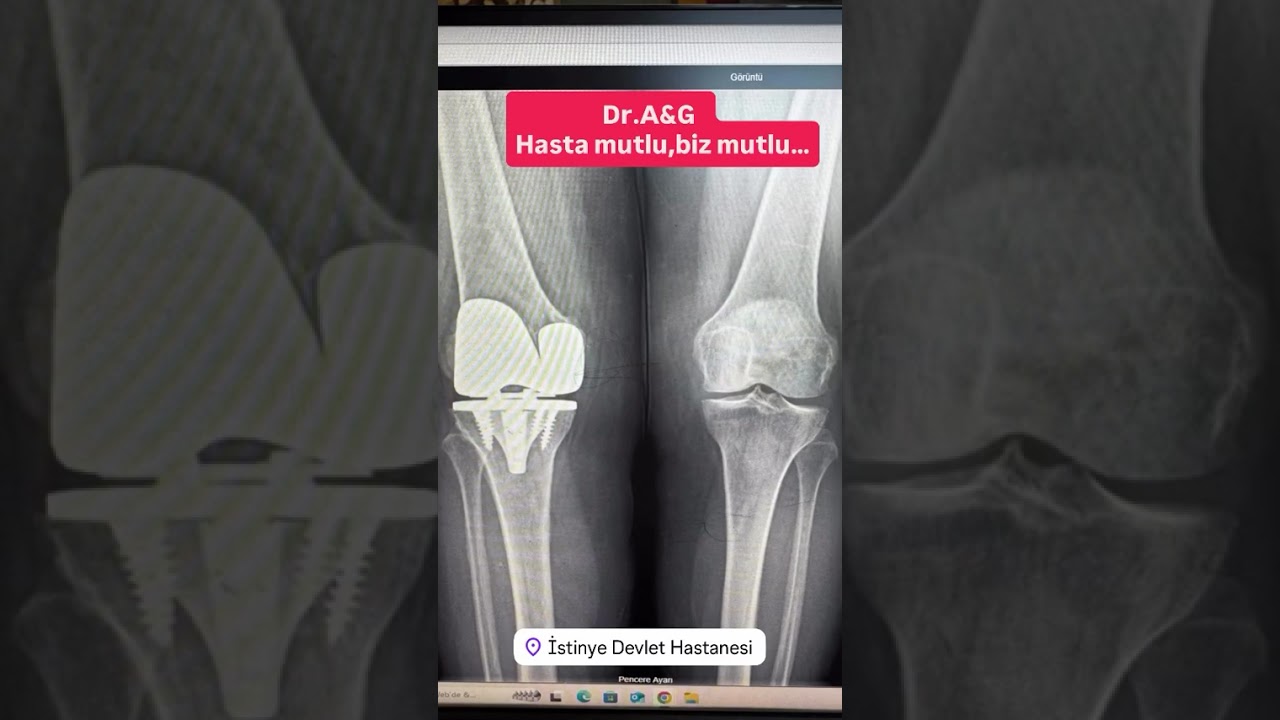
What is Cementless Knee Replacement?
Knee replacement is a surgical treatment method that aims to reduce pain and improve joint function in advanced knee joint damage.
A knee prosthesis is a structure made up of artificial joint components that replace the surfaces of a severely damaged knee joint. The surgery to place these components, known as prosthetic surgery, aims to reduce pain and improve movement function.
Summary: Knee replacement surgery is a surgical treatment option considered for advanced joint damage. Initially, exercise tailored to the individual, physiotherapy, medication, or selected injection options are evaluated. If these methods prove insufficient or are not appropriate, surgery may be considered. The prosthesis type and surgical method are determined based on examination findings. Recovery varies from person to person; risks include infection, blood clots, loosening, and the need for further surgery.
What is Knee Replacement?
Knee prostheses are artificial components designed to take over the function of damaged joint surfaces. Through prosthetic surgery, these components are attached to bone; the aims are to reduce pain and support daily movement. Not all knee pain requires replacement. The decision is made by evaluating the degree of joint damage together with the patient's symptoms, loss of function and response to previous treatments.
Prosthetic surgery is a type of arthroplasty. It does not mean the entire knee joint is removed.
Comfortable Movement with Knee Replacement
The goal of knee replacement surgery is to help you walk more easily, get up and sit down, and manage daily activities more comfortably when pain has made these difficult. The degree of movement achieved varies from person to person. Muscle strength before surgery, joint stiffness, overall health and the rehabilitation process may influence outcomes. Complete pain relief or a feeling identical to a natural knee cannot be guaranteed.
Treatment goals should be discussed based on your needs:
- Safe movement at home
- Improving walking ability
- Supporting independence in daily activities
Knee Joint Problems Can Be Managed with Treatment
Treatment of knee joint problems is planned based on the cause of pain and the degree of damage. Medications, physiotherapy, exercise and injections in suitable patients can reduce symptoms. When advance damage means suitable options have not worked, prosthetic surgery may be considered. Not every patient must try all treatments sequentially; unsuitable procedures are not pursued.
The aim of treatment is to address not only imaging findings but also the impact of pain on daily life.
When Might Knee Replacement Be Needed?
Knee replacement may be considered when advanced joint damage causes pain or significant loss of function. Difficulty walking, night-time pain and disruption to daily activities are important in the assessment. The presence of these symptoms does not automatically mean surgery is needed; clinical examination, imaging and response to suitable treatments for that individual are considered together.
- Persistent knee pain
- Reduction in walking distance
- Difficulty using stairs
- Inward or outward deviation
- Pain that affects sleep
What is the Purpose of Knee Replacement?
Knee replacement surgery is performed to reduce pain arising from damaged joint surfaces and improve the usability of the knee in daily life. Correction of deformity and improvement of movement range may also be aims. Expectations are determined for each patient before surgery; not all patients achieve the same level of movement and complete resolution of all symptoms should not be expected.
- Reduce pain
- Support movement
- Improve daily function
- Align the joint
What is the Structure of Knee Replacement?
A knee prosthesis consists of a metal component on the thighbone side, a base on the shin bone side, and a special plastic piece between them that allows movement. Components are designed to integrate with body tissues. The structure used varies depending on joint damage and the surgical plan; a surface replacement of the kneecap is not performed in every patient.
- Femoral component: Covers the joint surface of the thighbone.
- Tibial component: Provides support on the tibia side.
- Spacer: Forms the articulation surface between the components.
Who May Be Suitable for Knee Replacement?
Suitability for knee replacement is determined by assessing together a person's advanced joint damage, their symptoms and overall health status. Age, activity expectations, weight, bone quality and related medical conditions influence the decision. The expected benefit of the operation, its risks and rehabilitation requirements are discussed with the patient to create a personalised treatment plan.
Assessment takes into account:
- The impact of pain on daily life
- The outcome of previous treatments
- Joint stability and bone structure
- Support needs after surgery
Which Conditions Require Knee Replacement?
Knee replacement may be considered in advanced joint damage arising from osteoarthritis, inflammatory rheumatologic diseases or trauma. Previous joint infections can also lead to permanent deterioration. The disease name alone does not determine the need for surgery; the extent of damage, severity of symptoms and the individual's loss of daily function are evaluated together. Osteoarthritis does not mean calcium deposits in the joint.
Primary Knee Osteoarthritis (Wear of Unknown Origin)
In osteoarthritis developing without an identified starting cause, cartilage loss, pain and stiffness may develop.
Rheumatic Diseases
Diseases such as rheumatoid arthritis can cause permanent joint damage.
Post-Traumatic Joint Damage
After fractures or severe ligament injuries, wear can develop in the joint.
Post-Infectious Joint Damage
In damage from previous infection, surgical planning requires separate evaluation of the infection status.
Failure to Respond to Other Treatments
When pain and loss of function persist despite suitable treatment, a prosthesis may be considered. Sounds from the knee do not automatically create a reason for surgery.
How is Knee Replacement Surgery Performed?
In knee replacement surgery, damaged joint surfaces are prepared and appropriate prosthetic components are inserted. Joint balance, alignment and range of motion are assessed during the operation. Before surgery, general health status and anaesthesia options are reviewed. The technique to be used, prosthesis design and post-operative weight-bearing plan are determined by the surgical team according to the patient's characteristics.
Surgical Steps
- Access is gained to the joint surfaces.
- Damaged surfaces are prepared.
- Prosthetic components are inserted.
- Balance and movement are checked, and the incision is closed.
Types of Anaesthesia
Spinal or epidural anaesthesia, or general anaesthesia, is selected following assessment by an anaesthetist.
Robotic-Assisted Knee Replacement Approach
Planning may be based on pre-operative CT/MRI data according to the system or on imageless mapping during surgery. A robotic arm or handheld instrument may be used. The system supports the surgeon to work within planned boundaries; accuracy is targeted in planning and execution.
How Long Does Knee Replacement Surgery Take?
The duration varies according to the extent of joint damage and the surgical plan; it will be explained during individual assessment.
Are There Alternatives to Knee Replacement?
Alternative treatments for knee replacement exist; the appropriate option is determined according to the stage of joint damage and the patient's symptoms. Exercise, physiotherapy, medications and certain supportive applications may help control symptoms. In selected patients with limited damage, other surgical options may be considered. The aims and limitations of alternatives should be evaluated alongside the expected benefits of prosthetic surgery.
Who Are Suitable Candidates for Alternative Treatments to Knee Replacement?
- Those with early or mid-stage wear
- Those with limited damage
- Those who do not wish to have surgery
- Those unsuitable for surgery from a surgical perspective
What Are the Alternative Treatment Methods for Knee Replacement?
Alternative treatments include individually tailored exercise, physiotherapy, medication, weight management and supportive devices. The benefits and evidence levels of intra-articular injections vary. When choosing treatment, the severity of symptoms, overall health and possible risks of treatment are considered. It cannot be said that any application will provide the same relief in everyone or delay surgery.
Medication Therapies
These aim to control pain; the choice of medication and duration of use are determined by the doctor.
Physiotherapy and Exercise Programmes
These may support muscle strength, range of motion and daily function.
Intra-Articular Injections
| Application | Expectations and limitations |
|---|---|
| Corticosteroid | May provide short-term relief in selected cases. |
| Hyaluronic Acid | Guideline support is limited; routine use is not recommended. |
| PRP | The limitations of evidence and variability of results should be explained. |
Relief of symptoms does not mean that surgery will be avoided or delayed.
Weight Control and Lifestyle Modifications
Appropriate weight management can help reduce the load on the joint.
Knee Braces and Supportive Devices
In selected patients, knee braces or insoles may help ease symptoms.
Corrective Surgeries (Osteotomy)
In selected patients, this aims to change load distribution. It is surgery; risks such as infection and blood clot formation should be considered.
In Which Situations Might Knee Replacement Become Unavoidable?
There is no single finding that makes knee replacement unavoidable for everyone. When there is advanced cartilage loss, persistent pain and loss of movement that limits daily life, the surgical option may become more attractive. Non-surgical options that are suitable for the individual are evaluated; the decision is made through discussion of the patient's preferences, expectations and surgical risks.
- Advanced joint damage
- Significant functional loss
- Persistent symptoms despite appropriate treatments
Do Alternatives to Knee Replacement Provide a Permanent Solution?
The effect of alternative treatments varies from person to person and permanent relief cannot be guaranteed. These applications aim to support pain control and maintain movement; they are not expected to reverse advanced joint damage. Reduction in symptoms may allow reconsideration of the surgical decision, but it cannot be said that any particular application will necessarily prevent or delay prosthetic surgery.
The decision to continue treatment is reviewed based on changes in daily function and side effects.
What Types of Knee Replacement Are There?
Knee replacement options are evaluated according to the extent of joint damage and the condition of the ligaments. The choice between total and partial replacement is based on anatomical and clinical findings. Replacement of a previously inserted prosthesis is revision surgery. Robotic assistance is not a separate implant type but an approach to planning and execution; it is not necessary to use it in every patient.
Total Knee Replacement
The joint surfaces of the thighbone and shinbone are replaced. Coverage of the kneecap's undersurface with the prosthesis is not performed in every case.
Partial (Unicompartmental) Knee Replacement
In patients with limited damage and suitable ligament structures, only the affected area is replaced.
Revision Knee Replacement
This is replacement of the prosthesis due to loosening, wear or infection; it may require extensive planning.
Robot-assisted knee replacement
The robotic system supports the surgeon's planning and execution. The imaging source and instrument used vary according to the system; superior outcome is not guaranteed.
Personalised Knee Replacements
Options designed according to anatomical characteristics may be considered as a result of individual assessment.
What Is the Recovery Process After Knee Replacement Like?
The recovery process after knee replacement consists of pain management, safe movement, wound care and rehabilitation. The timing of getting up and weight-bearing is determined by the surgical team. Recovery speed varies from person to person; the return to daily activities and the development of muscle strength and endurance may not progress at the same pace. During follow-up visits, progress and any potential complications are assessed.
Mobilisation (Early Movement)
When appropriate, this is begun with physiotherapy support. Assistive devices and weight-bearing level are selected according to the individual.
Physiotherapy and Rehabilitation
- Range of motion exercises
- Muscle strengthening
- Walking and balance training
Expected Recovery Time
An exact completion timeframe cannot be given. The need for support, pain level and functional level are monitored and the programme is adjusted accordingly.
What Are the Risks and Complications After Knee Replacement?
After knee replacement, infection, deep vein thrombosis, restricted movement, loosening and need for re-operation may develop. Nerve or blood vessel injury may lead to permanent consequences. Risks vary according to individual health characteristics. It is important to know at what pace new symptoms should be assessed; not all of the following thresholds need to be present.
Infection Risk
Increasing redness, warmth, swelling or discharge should be assessed on the same day. Infection can develop without fever.
Blood Clot Formation (Deep Vein Thrombosis)
New one-sided leg swelling, pain or calf tightness requires assessment on the same day.
Restricted Movement and Stiffness
Can develop for various reasons; should not be attributed to exercise compliance alone.
Prosthesis Loosening or Wear
Can cause pain and loss of function; follow-up is required.
Nerve or Blood Vessel Injury
Cannot be assumed to be temporary. Permanent nerve damage or loss of circulation requiring emergency intervention may develop.
Pain and Swelling
May be seen during healing; new or worsening symptoms should be assessed.
Revision Surgery Needed
Infection, loosening or wear may require further surgery.
Any one or more of the symptoms on each line is sufficient for consultation.
| When to seek care | Symptoms |
|---|---|
| Immediately call 112/emergency services | Sudden shortness of breath, chest pain, fainting, coughing up blood, or rapid palpitations. |
| Immediately call 112/emergency services | Severe pain disproportionate to the injury, constant or rapidly increasing; pain markedly increased with passive movement; tight swelling, numbness or weakness. Compartment syndrome is a surgical emergency. |
| Immediately call 112/emergency services | Coldness, paleness, bruising of the limb, new numbness, or loss of strength. |
| Immediately call 112/emergency services | New confusion or incoherent speech; fever is not expected. |
| Immediately call 112/emergency services | Severe pain, deformity, inability to move, inability to bear weight, or uncontrolled bleeding. |
| Medical evaluation the same day | One-sided leg swelling, pain or calf tightness; increasing redness, warmth, swelling, discharge in the wound or opening of wound edges. |
| Medical evaluation the same day | Fever of 38°C or above or persistent fever, with chills or deterioration in general condition. The lower threshold in the discharge instructions applies. |
What Should Be Taken Into Account in Daily Life After Knee Replacement?
Return to daily life is planned gradually based on knee control and safe movement capacity. Assistive device use, stairs and sit-to-stand techniques should be performed as shown by the physiotherapist. At home, it is important to reduce fall risk, comply with prescribed treatment and monitor for new symptoms. Decisions about driving or travel should not be based on time elapsed alone.
Daily Movement and Activity
Walking and rest schedule should be adjusted according to your doctor's or physiotherapist's recommendation.
Sitting, Standing and Using Stairs
Apply the holding and assistive device technique taught by the physiotherapist. A walker should not be used on standard stairs. Seating height should be adjusted to the individual.
Daily Home Arrangements
- Secure slippery rugs.
- Provide a non-slip surface in the bathroom.
- Illuminate walkways.
Weight Control and Nutrition
Nutrition should be planned according to your overall health status.
Compliance with Physiotherapy and Exercise
The programme is continued according to your personal movement capacity.
Driving and Social Life
Driving requires medical assessment, full control and the ability to brake safely in an emergency. There must be no effects of medications that cause drowsiness or dizziness. Do not stop your medications on your own. Before long journeys, your personal risk of blood clots should be assessed.
Warning Signs to Watch For
The referral table above applies. After a fall, severe pain or inability to bear weight requires immediate emergency assessment.
What Exercises Are Done After Knee Replacement?
Exercises after knee replacement are individually planned to improve range of motion, muscle strength and walking safety. The programme may include ankle movements, muscle activation and controlled knee movements. Starting time, repetitions and support needs are determined by the physiotherapist. The examples here do not replace instruction by the physiotherapist or guidance from the surgical team.
When Do Exercises Begin?
They begin under physiotherapist supervision when the surgical team considers it appropriate.
Early-Stage Knee Replacement Exercises
As shown by the physiotherapist:
- Ankle pumping
- Tightening and relaxing thigh muscles
- Controlled knee straightening
Exercises to Increase Range of Motion
Supported bending and straightening movements are performed within the shown limits.
Muscle Strengthening Exercises
Work targeting thigh and hip muscles is selected according to the individual.
Walking and Balance Exercises
The need for assistive devices and supervision is determined by the physiotherapist.
What Should Be Considered When Exercising?
- Do not force movements.
- Follow the programme shown.
- Stop if new severe pain occurs; monitor for emergency referral thresholds.
When Is Walking Resumed After Knee Replacement?
It begins according to overall condition and weight-bearing clearance; no fixed schedule applies.
First Mobilisation
Under physiotherapist supervision, standing up and short walking with appropriate assistive device are practised.
Early Home Period
Walking and exercises are continued according to the given plan.
Reassessment of Support Needs
The decision to reduce the device is made based on balance and muscle control.
Transition to Independent Walking
Transition to walking without support is planned by assessing safe movement capacity.
This information is for educational purposes and does not replace diagnosis and treatment. Please consult your doctor about your symptoms.
Frequently Asked Questions
undefined
undefined
undefined
undefined
undefined
undefined
undefined
undefined
undefined
undefined
undefined
undefined
undefined
undefined
undefined
undefined
undefined
undefined
undefined
undefined
undefined
undefined
undefined
undefined
undefined
undefined
undefined
undefined
undefined
undefined
undefined
undefined
undefined
undefined
undefined
undefined
undefined
undefined
undefined
undefined
undefined
undefined
undefined
undefined
undefined
undefined
undefined
undefined
undefined
undefined
undefined
undefined
undefined
undefined
undefined
undefined
undefined
undefined
undefined
undefined
undefined
undefined
undefined
undefined
undefined
undefined
undefined
undefined
undefined
undefined
undefined
undefined
undefined
undefined





Schedule an Appointment
Your information will be sent to Dr. Atakan Güvendiren's clinic. A response will be provided within 24 hours.