
Meniscal Tear
Meniscus tear is a condition in which the meniscus cartilage tissue located within the knee joint loses its integrity due to strain, trauma or deterioration over time.

Dr. Atakan Güvendiren
Orthopaedics and Traumatology · Istanbul
{ AI · initial information }
onlineLet's discuss your knee
AI answers do not replace a medical diagnosis.
Meniscus tears, one of the most common causes of knee pain, can occur in both young athletes and older age groups; early diagnosis and proper treatment are of great importance.
Meniscus tear is damage to the fibrocartilage tissue in the knee joint caused by injury or deterioration over time. It can cause pain, swelling, catching sensation or restricted movement. Treatment is individualised by assessing the source of symptoms and knee function.
Summary: Meniscal tear is a knee joint injury that can present in different patterns. Not every tear requires surgery. Exercise and physiotherapy are the priority in suitable patients. True locking should be evaluated without delay. Recovery after surgery and return to sport depend on the procedure performed and functional assessment.
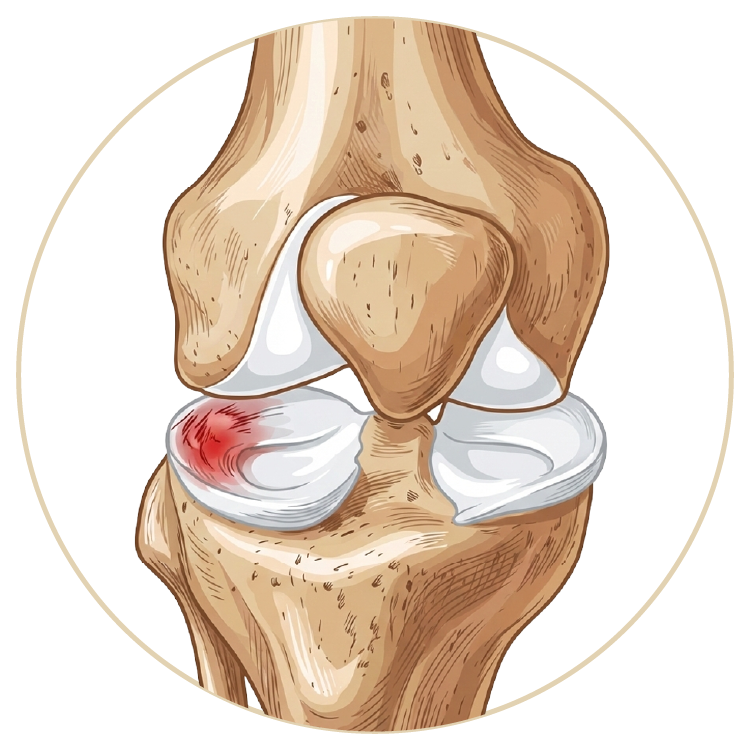
Is the Catching and Locking Sensation in Your Knee Affecting Your Daily Life?
Catching sensation in the knee may be seen with meniscus tears; however, examination is needed for diagnosis. Genuine locking of the knee preventing it from straightening is different from intermittent catching and must be evaluated promptly. The location of pain, its onset, swelling and restricted movement help inform treatment decisions. Symptoms should not be explained by imaging findings alone; the impact on daily activities is also assessed.
What is the Meniscus?
The meniscus is a crescent-shaped fibrocartilage structure located between the thigh bone and shin bone. There are two menisci in the knee: inner and outer. These tissues help distribute load across the joint surfaces and contribute to balance during movement. Meniscus tissue has a different structure from cartilage covering the bone surfaces in the joint.
What is the Function of the Meniscus?
Menisci contribute to load distribution, shock absorption and knee stability. They help protect joint surfaces whilst supporting knee function during movement. When damaged, these functions may be affected; however, the extent of impact depends on the characteristics of the tear. Not every meniscus tear causes the same degree of pain or restricted movement.
- Distributes load over a wider area.
- Helps absorb impact.
- Supports joint alignment.
Safe Movement with Meniscus Tear Treatment
The goal of meniscus tear treatment is to reduce pain and support daily activities. Non-surgical options appropriate for the individual are considered first. Surgery is considered in selected cases where these options are insufficient or not suitable. Treatment outcomes vary from person to person; complete pain-free movement or healing of the tear cannot be guaranteed.
Effective Solution for Knee Function: Meniscus Tear Treatment
Choice of treatment for meniscus tear is based on weighing expected benefits and possible risks together. One method is not suitable for everyone. Whether the pain originates from the meniscus, accompanying osteoarthritis and restricted movement are investigated. The decision is made according to clinical findings, the individual's needs and their response to available options.
Meniscus Structure and Anatomy
The blood supply to the meniscus decreases from the outer edge towards the inner portions. This difference is one of the factors affecting the likelihood that a tear will heal and be repaired. Decisions are not made on blood supply alone; tissue quality, tear shape and accompanying damage are also important. Anatomical assessment helps understand the possibility of preserving the meniscus.
- Red zone: Outer region with more pronounced blood supply.
- Red–white zone: Transitional area.
- White zone: Inner region with very limited blood supply.
Why is the Meniscus Important?
Preservation of meniscus tissue is important for maintaining load distribution in the knee. Loss of tissue can alter loading on the joint cartilage and increase the risk of osteoarthritis. However, not everyone with meniscus damage develops the same knee outcome. Assessment considers the current state of cartilage, pain and movement capacity together; treatment is shaped accordingly.
What is Meniscus Tear?
Meniscus tear is a structural separation in the meniscus tissue. It can develop from a sudden injury or from degeneration developing over time. It can occur in both young and older individuals. Detection of a tear on imaging does not show that all symptoms stem from it; its correspondence with examination findings is assessed. The need for treatment is determined based on the individual's symptoms and knee function.
How Does Meniscus Tear Occur?
Meniscus tear can occur from strains such as the knee twisting while the foot is planted. It can also develop without significant trauma in age-related tissue changes. The mechanism of injury helps with diagnosis; however, the type of tear cannot be determined from the movement alone. Symptom onset and clinical findings are evaluated together; imaging is used if needed.
- Sudden change of direction in sport.
- Fall or strain.
- Tissue deterioration over time.
What are the Types of Meniscus Tear?
Meniscal tears are classified by their shape and location. This classification affects treatment planning; however, it alone does not determine the decision for surgery. Whether the tear blocks movement, whether the tissue is suitable for repair, and any associated joint problems are important. Tears with the same name can lead to different symptoms and treatment needs in different people.
- Longitudinal tear.
- Bucket handle tear.
- Radial tear.
- Horizontal tear.
- Complex tear.
Why is Meniscal Tear Important?
Meniscal tear can affect daily life due to pain, swelling, or restricted movement. Some tears can disrupt load distribution in the joint. However, not all tears progress, and not all untreated tears develop into osteoarthritis. Proper assessment, monitoring, rehabilitation or surgical options will help determine what is needed.
What Are the Symptoms of Meniscal Tear?
In meniscal tear, pain on the inner or outer side of the knee, swelling, catching and restricted movement may occur. Symptoms vary from person to person; some tears may not cause noticeable complaints. Not all knee pain originates from the meniscus. The duration of symptoms, their relationship to injury and impact on daily function are considered together in diagnostic assessment.
Most Common Symptoms of Meniscal Tear
Complaints associated with meniscal tear may be noticed during or after movement. Pain may be accompanied by swelling, instability or loss of movement; these do not have to occur together. As symptoms can be seen in other knee problems, self-diagnosis is not appropriate. True locking, however, is a condition that requires prompt assessment.
Knee Pain
- Can be felt on the inner or outer joint line.
Swelling in the Knee (Oedema)
- Can cause fullness and tightness in the knee.
Locking and Catching Sensation in the Knee
- In true locking, the knee cannot be straightened.
Restricted Movement
- Bending or straightening may become difficult.
Clicking or Popping from the Knee
- The source of the sound is assessed on examination.
Knee Instability and Feeling of Giving Way
- May be noticed when walking or turning.
When Do Symptoms of Meniscal Tear Appear?
In traumatic tears, symptoms may start at the time of injury; swelling may become more pronounced later. In degenerative tears, the onset may be more gradual. Early or late onset of symptoms does not alone indicate the severity of the tear. Assessment timing is determined by the severity of pain, loss of movement and the alarm signs below; if worsening occurs, do not wait.
Which Symptoms Should Be Taken Seriously?
True locking of the knee, increasing pain or significant loss of movement require prompt assessment. In emergencies, not all signs need to be present: any one or several of the following are sufficient. Do not delay seeking care by trying pain relievers. The same safety approach applies after surgery; discharge instructions should also be noted.
| When to seek care | Symptoms |
|---|---|
| Immediately call 112/emergency services | Sudden shortness of breath, chest pain, fainting, coughing up blood, or rapid palpitations. |
| Immediately call 112/emergency services | Severe pain disproportionate to the injury, persistent or rapidly worsening; pain that significantly increases with passive movement; tense swelling, numbness, or weakness. |
| Immediately call 112/emergency services | Cold extremity, paleness, bruising, new numbness or weakness; new confusion or incoherent speech; uncontrollable bleeding. |
| Immediately call 112/emergency services | Severe pain, deformity, inability to move or bear weight; this is not expected even after a fall or blow. |
| Medical evaluation the same day | One-sided leg swelling, pain or calf tightness. |
| Medical evaluation the same day | Increasing redness, warmth, swelling, discharge or gaping of wound edges at the surgical site. Fever need not be present. |
| Medical evaluation the same day | Fever of 38°C or above or persistent fever, chills or general deterioration. If discharge instructions specify a lower threshold, that applies. |
Conditions That Can Resemble Meniscal Tear Symptoms
Anterior cruciate ligament injuries, other ligament sprains, knee osteoarthritis and cartilage damage can cause similar complaints. More than one problem can be present in the same knee. Diagnosis is based on history and examination; imaging may support it if needed. MRI findings are interpreted together with the person's symptoms; treatment decisions are not made from imaging alone.
What Are the Treatment Methods for Meniscal Tear?
Treatment is planned according to the characteristics of the tear and the person's needs. In degenerative tears, structured non-surgical approach is preferred initially. Large tear size or persistent pain alone does not indicate surgical necessity. Whether suitable options for the individual are insufficient or inappropriate is evaluated; early surgery may be needed for displaced tears causing true locking.
1. Non-surgical Treatment Options
Choice is not based solely on age, activity level or blood supply.
Physiotherapy and Exercises
Following diagnosis, performed as shown by the doctor or physiotherapist:
- Muscle strengthening.
- Balance exercises.
- Appropriate range of motion exercises.
Rest, Ice and Medication
Activity modification, cold application and medicines are planned according to doctor's recommendation. Do not stop your medicines on your own decision.
Strapping and Supportive Measures
The need for a knee brace or strapping is determined by individual assessment.
2. Surgical Treatment Methods
Arthroscopy allows procedures to be performed inside the joint using a camera and surgical instruments.
Arthroscopic Meniscus Repair
A suitable tear is repaired with sutures; healing is not guaranteed.
Partial / Total Meniscectomy
In partial meniscectomy, the damaged portion is removed; in total meniscectomy, the entire meniscus is removed. The aim is to preserve as much tissue as possible.
Meniscus Repair or Meniscus Removal?
Suitability for repair is assessed by tissue quality and tear characteristics.
3. Meniscus Transplantation
Can be considered in selected patients with significant meniscus loss.
Who Is Meniscus Transplantation Suitable For?
Cartilage condition, knee stability and ongoing symptoms are examined together.
Advantages and Disadvantages of Meniscus Transplantation
Aims to reduce pain and support function; it cannot be guaranteed to prevent osteoarthritis. Requires rehabilitation and is not suitable for everyone.
What Is the Recovery Process After Meniscus Surgery Like?
Recovery depends on the type of procedure performed and individual assessment. In meniscus repair, because the repaired tissue must be protected, weight-bearing and movement restrictions may differ. Closed method does not mean the surgery is risk-free. Rehabilitation plan is determined by the surgeon and physiotherapist; return to daily life and return to sport are assessed separately.
First Days After Surgery
Pain control, wound monitoring and permitted movements are the priority.
First Weeks
Weight-bearing and range of motion are advanced according to the plan given to you.
Physiotherapy and Rehabilitation Process
Muscle strength, movement and balance exercises are individualised.
Period of Functional Recovery
Daily activities are gradually increased based on assessment findings.
Return to Sport Process
Timeline alone is not sufficient; knee function and movements required by the sport are assessed.
When Does Full Recovery Occur?
There is no fixed timeframe applicable to everyone for complete recovery. Wound closure, comfortable walking, and readiness for sport are different stages. The processes following meniscus repair differ from those following tissue removal. Progress is determined by the physician based on assessment of pain and swelling, range of motion, and muscle strength.
What Should I Be Careful About After Meniscus Surgery?
After surgery, weight-bearing, knee bending, and exercise limits vary according to the procedure performed. Movement must be carried out as shown by your surgeon or physiotherapist. Check-ups and wound monitoring must continue. Do not change prescribed medications of your own accord. New or worsening symptoms, especially findings in the alarm chart below, should not be accepted as normal recovery.
- Use assistive devices as instructed.
- Do not use a walker on standard stairs.
- Perform exercises according to your individual programme.
What Are Possible Risks and Temporary Complaints?
After surgery, swelling, tenderness, stiffness, or muscle weakness may occur; it is incorrect to regard all of these as rare or insignificant. Infection, deep vein thrombosis, and pulmonary embolism are among surgical risks. Repair healing failure, re-tearing, or need for further surgery may occur. The timing for reporting findings is explained in the alarm chart above.
Frequently asked questions
Answers to questions about the meniscus vary depending on the characteristics of the tear and the treatment applied. The following explanations do not replace personal examination. Particularly for post-operative weight-bearing and return to sport, the plan established by your surgeon should be followed. Rather than deciding based on time alone, the functional status and healing of the knee are evaluated.
What is a meniscus tear?
It is loss of integrity of meniscal tissue due to injury or wear.
Does a meniscus tear heal on its own?
Healing depends on the characteristics of the tear; reduction of symptoms does not indicate that tissue has fully healed.
Does a meniscus tear always require surgery?
No. In suitable patients, symptoms can be managed with non-operative treatment.
How is a meniscus tear treated without surgery?
Treatment can be planned with personalised exercises, physiotherapy, activity modification, and appropriate medications.
When is meniscus tear surgery needed?
It is considered for tears that obstruct movement or in selected cases where appropriate non-operative options have proven insufficient.
Is meniscus surgery a difficult procedure?
The difficulty of the procedure varies; performing it arthroscopically does not make the surgery minor or risk-free.
How long does meniscus surgery take?
The duration varies depending on the characteristics of the tear and the procedure to be performed.
How long after meniscus surgery can I walk?
Permission to start walking and bearing weight is determined according to the procedure performed.
How long does recovery take after meniscus surgery?
The processes following repair and meniscectomy differ; evaluation is not based solely on a calendar.
Is physiotherapy mandatory after meniscus surgery?
The need for rehabilitation and level of supervision are determined on an individual basis.
When can I return to sport after meniscus surgery?
Sport is gradually reintroduced with physician approval based on assessment of knee function and the demands of the sport.
Can a meniscus tear recur?
Re-tearing can occur; appropriate rehabilitation does not entirely eliminate this possibility.
Can a meniscus tear lead to knee osteoarthritis?
Risk may increase; however, not every tear results in osteoarthritis.
What happens if the meniscus is removed?
Tissue loss can alter load distribution; the aim is to preserve the meniscus as much as possible.
Will a meniscus tear definitely show on MRI?
MRI is helpful; findings are interpreted together with history and clinical examination.
Is a meniscus tear the same as a ligament tear?
No. These are injuries to different tissues; they can occur together in the same knee.
Where is the pain from a meniscus tear felt?
It can be felt on the inner or outer side of the knee, sometimes at the back.
Can a person with a meniscus tear do sport?
Suitable activity is determined by your physician or physiotherapist following examination.
Can a meniscus tear progress?
The course is variable; not every tear is expected to enlarge or worsen.
How should people with a meniscus tear sit?
Sitting and bending limits, particularly after surgery, should be applied as instructed by your surgeon or physiotherapist.
Does a meniscus tear resolve completely?
Symptoms may improve; complete healing or pain-free movement cannot be guaranteed.
Findings not applied
Duration inconsistencies in frontmatter and responses minimising surgery could only be partially addressed within this body text correction; further revision is required before publication.
This information is for educational purposes and does not replace diagnosis and treatment. Please consult your doctor about your symptoms.
Frequently Asked Questions
What is a meniscus tear?
It is loss of integrity of meniscal tissue due to injury or wear.
Does a meniscus tear heal on its own?
Healing depends on the characteristics of the tear; reduction of symptoms does not indicate that tissue has fully healed.
Does a meniscus tear always require surgery?
No. In suitable patients, symptoms can be managed with non-operative treatment.
How is a meniscus tear treated without surgery?
Treatment can be planned with personalised exercises, physiotherapy, activity modification, and appropriate medications.
When is meniscus tear surgery needed?
It is considered for tears that obstruct movement or in selected cases where appropriate non-operative options have proven insufficient.
Is meniscus surgery a difficult procedure?
The difficulty of the procedure varies; performing it arthroscopically does not make the surgery minor or risk-free.
How long does meniscus surgery take?
The duration varies depending on the characteristics of the tear and the procedure to be performed.
How long after meniscus surgery can I walk?
Permission to start walking and bearing weight is determined according to the procedure performed.
How long does recovery take after meniscus surgery?
The processes following repair and meniscectomy differ; evaluation is not based solely on a calendar.
Is physiotherapy mandatory after meniscus surgery?
The need for rehabilitation and level of supervision are determined on an individual basis.
When can I return to sport after meniscus surgery?
Sport is gradually reintroduced with physician approval based on assessment of knee function and the demands of the sport.
Can a meniscus tear recur?
Re-tearing can occur; appropriate rehabilitation does not entirely eliminate this possibility.
Can a meniscus tear lead to knee osteoarthritis?
Risk may increase; however, not every tear results in osteoarthritis.
What happens if the meniscus is removed?
Tissue loss can alter load distribution; the aim is to preserve the meniscus as much as possible.
Will a meniscus tear definitely show on MRI?
MRI is helpful; findings are interpreted together with history and clinical examination.
Is a meniscus tear the same as a ligament tear?
No. These are injuries to different tissues; they can occur together in the same knee.
Where is the pain from a meniscus tear felt?
It can be felt on the inner or outer side of the knee, sometimes at the back.
Can a person with a meniscus tear do sport?
Suitable activity is determined by your physician or physiotherapist following examination.
Can a meniscus tear progress?
The course is variable; not every tear is expected to enlarge or worsen.
How should people with a meniscus tear sit?
Sitting and bending limits, particularly after surgery, should be applied as instructed by your surgeon or physiotherapist.





Schedule an Appointment
Your information will be sent to Dr. Atakan Güvendiren's clinic. A response will be provided within 24 hours.