
Swelling Behind the Knee: Assessing a Baker's Cyst
11 October 2026, 7 min
Editor: DijitalPi Content Team, Updated: 11 October 2026
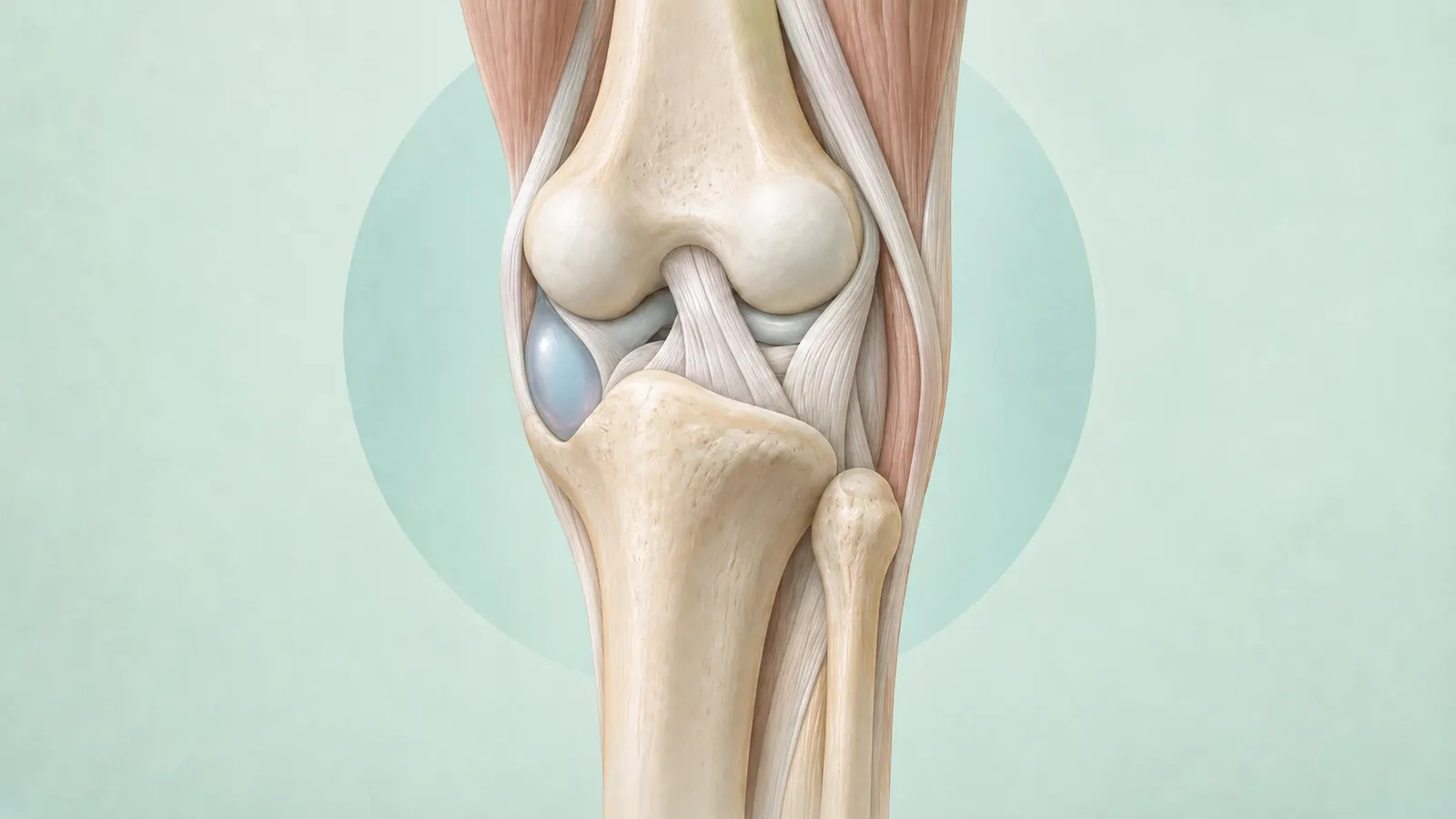
In this article 08
- 01Is every swelling behind the knee a Baker's cyst?
- 02Why can a Baker's cyst develop?
- 03Which symptoms need same-day or emergency care?
- 04What information should you prepare for the appointment?
- 05Why might ultrasound, X-rays or MRI be requested?
- 06How are treatment options selected?
- 07How can movement and daily life be adjusted?
- 08Frequently asked questions
A Baker's cyst is a fluid collection in a sac behind the knee associated with joint fluid. It may feel like fullness, tightness or swelling. Not every swelling there is a Baker's cyst; a newly noticed swelling should be assessed by examination.
Summary: In adults, a Baker's cyst may accompany another problem within the knee. Examination assesses both the swelling and the joint. Ultrasound or MRI may be requested. Sudden worsening calf pain or new swelling needs same-day assessment even with a known cyst. Treatment depends on symptoms and the underlying cause; not every cyst needs surgery.
Is every swelling behind the knee a Baker's cyst?
A swelling behind the knee should not be named solely from its location or feel. The doctor assesses its duration, changes and effect on movement. Imaging may distinguish a fluid-filled sac from another lesion. A new swelling needs assessment even if painless.
A home photograph or someone else's similar symptoms cannot replace examination. Do not postpone care based on shortcuts such as 'soft means harmless' or 'disappearing when bent means definitely a cyst'.
A useful first description is: 'I noticed it on this date; this changes when I walk or bend.' Mention if pain and swelling began at different times. See causes of knee pain for broader joint assessment information.
Why can a Baker's cyst develop?
Conditions increasing joint fluid can contribute to filling the sac behind the knee. In adults, osteoarthritis, meniscus problems or joint inflammation may be considered. Management therefore goes beyond shrinking the visible swelling to investigating why fluid increased.
The AAOS Baker's cyst guide explains its relationship with conditions inside the knee. This does not mean everyone with a cyst has the same joint damage. Examination and any tests are tailored to the person.
Someone with a meniscus tear or osteoarthritis should not dismiss a new swelling as part of the old diagnosis. Previous diagnosis does not remove the need to assess a new symptom. Bringing old images may help comparison.
Which symptoms need same-day or emergency care?
Timing depends on changes and associated symptoms. Sudden worsening calf pain, new swelling, warmth or colour changes need same-day assessment. A ruptured Baker's cyst and a venous clot can cause similar symptoms. Do not wait while trying to distinguish them at home. The NHS Baker's cyst guide stresses this distinction.
| Situation | When to seek care |
|---|---|
| New swelling behind the knee with an unknown cause | Arrange an examination. |
| New calf pain, new one-sided leg swelling, rapidly worsening symptoms or skin warmth/colour changes | Seek same-day medical assessment. |
| Sudden breathlessness, chest pain or fainting | Call 112; do not drive yourself. |
| Sudden severe pain, inability to bear weight, new foot coldness or marked weakness | Go to an emergency department; call 112 if needed. |
These symptoms need not all occur together. Explaining new leg swelling as 'the cyst was already there' can be misleading. The NHS venous clot guide recommends prompt assessment of one-sided leg pain and swelling.
What information should you prepare for the appointment?
The team may ask about onset, previous knee problems, daily movement and medicines. Share recent surgery, prolonged immobility or previous clots. Describe changes briefly and concretely rather than filtering out information you think unimportant.
Note these questions before your appointment:
- When was the swelling first noticed, and has its size changed?
- What do you feel when bending or straightening the knee?
- Are there new symptoms in the calf or elsewhere in the leg?
- Was a similar swelling investigated before?
- Which prescription and nonprescription medicines do you take?
Do not delay emergency care to prepare documents or photographs. Examination can proceed without old test results. There is no need to press the swelling or force the knee to reproduce symptoms.
Why might ultrasound, X-rays or MRI be requested?
Imaging is selected for the question the doctor needs to answer. Ultrasound may assess a fluid-filled lesion; suspected vascular problems need targeted testing. X-rays assess bone and joint changes, while MRI can assess soft tissues and internal knee structures when needed. Not everyone needs every test.
Tests are not interchangeable. Ask: 'Does this examine the swelling, blood vessels or another problem inside the knee?' This clarifies the purpose. A report's conclusion alone should not determine treatment.
Finding a cyst on imaging does not establish that it causes every symptom. Symptom location, relation to movement and examination findings are considered together when discussing treatment.
How are treatment options selected?
Treatment depends on symptoms, restricted movement and the associated knee problem. Monitoring and activity adjustment may suffice for some. Medication, physiotherapy and procedures are considered individually. Finding a cyst does not automatically mean drainage or surgery.
Drainage or injection may be considered in selected cases; discuss the goal, risks and possible fluid recurrence. If the joint problem persists, treating only the swelling may not give lasting relief. The need for surgery is assessed separately.
If a procedure is proposed, ask which symptom it aims to improve, whether monitoring is suitable and what happens if swelling recurs. Procedures carry risks such as infection and bleeding; outcomes vary.
How can movement and daily life be adjusted?
Movement is planned individually after assessing the cause. Discuss activity changes with your doctor or physiotherapist instead of pushing through worsening pain. An online exercise programme cannot replace assessment, especially for sudden calf swelling or new pain. No exact time can be promised for spontaneous shrinkage.
Describe commuting, stairs, sitting and sleep as well as walking distance, so the plan fits daily life. Do not crush the cyst, use forceful massage or try to drain it yourself.
The follow-up plan should specify which changes require reassessment. If the swelling looks different, new calf symptoms appear or movement becomes much harder, ask whether previous advice still applies.
Frequently asked questions
Is a Baker's cyst dangerous?
A confirmed Baker's cyst does not always need intervention, but new or changing swelling needs assessment. Sudden calf pain or one-sided swelling requires distinguishing cyst rupture from causes such as a clot. Symptoms alone cannot reliably distinguish these at home.
Can a Baker's cyst go away on its own?
Some cysts shrink over time; symptoms may improve when the underlying knee problem is treated. Timing varies. Monitoring should be chosen after examination. Increased swelling, new pain or affected daily movement requires reviewing the follow-up plan.
Will drainage prevent the cyst from returning?
Drainage does not guarantee that fluid will not return. The joint problem and reason for increased fluid matter. Discuss expected benefit, recurrence, risks and follow-up. Do not intervene yourself for recurrent swelling; seek another examination.
Outcomes of any surgical or interventional procedure may vary from person to person.
This information is for educational purposes and does not replace diagnosis and treatment. Please consult your doctor about your symptoms.