
What Does 'Medial and Lateral Collateral Ligaments Are Normal' Mean?
11 October 2026, 4 min
Editor: DijitalPi Content Team, Updated: 11 October 2026
In this article 06
- 01What do the words in the report mean?
- 02Why can the knee hurt if the collateral ligaments are normal?
- 03How do the report and examination complement each other?
- 04How can you prepare for the consultation?
- 05When should you seek care without waiting for the report?
- 06Frequently asked questions
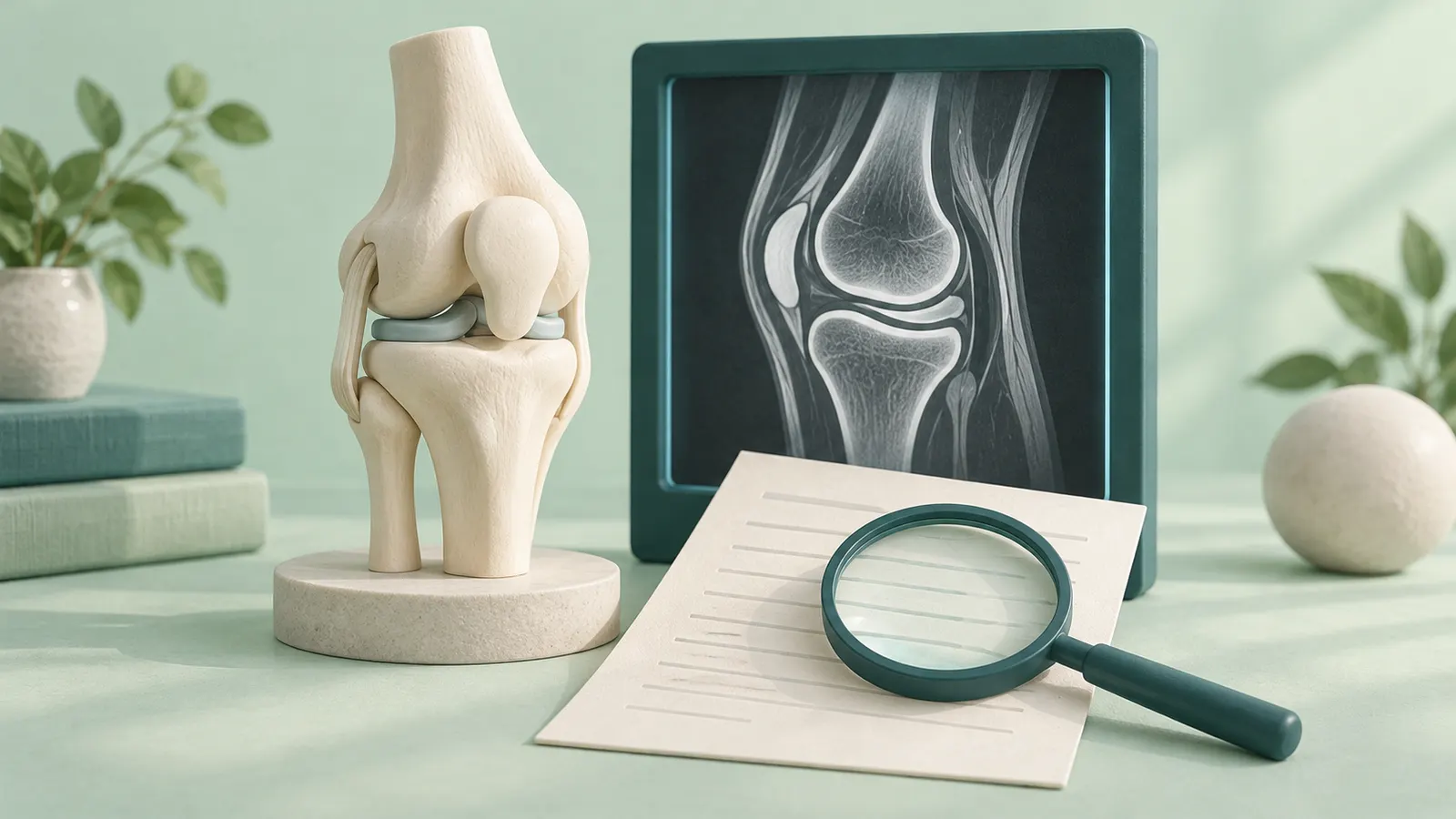
'Medial and lateral collateral ligaments are normal' on an MRI report means the inner and outer side ligaments appear normal on imaging. It refers only to those structures. It does not mean every potential source of knee pain is normal or examination is unnecessary.
Summary: Medial means inner, lateral outer, and ligament is a supporting band. One MRI sentence cannot summarize the whole knee. Symptoms, examination, images and the rest of the report are assessed together.
What do the words in the report mean?
The inner ligament runs between the thighbone and shinbone; the outer ligament connects the thighbone to the fibula, the thinner outer lower-leg bone. They help resist sideways forces. The AAOS collateral ligament guide explains their location and injury assessment.
| Term | Plain meaning |
|---|---|
| Medial collateral ligament / MCL | The knee's inner side ligament |
| Lateral collateral ligament / LCL | The knee's outer side ligament |
| Normal appearance | Usual imaging appearance of the structure examined |
| MRI report | The radiologist's written interpretation of the images |
Reports vary in wording. Ask what 'normal', 'intact' or 'continuity preserved' means in your report. Do not remove these words from context and make them the sole explanation for all symptoms.
Why can the knee hurt if the collateral ligaments are normal?
The knee also contains menisci, cartilage, tendons, bone and other ligaments. One normal structure does not replace assessment of the others. Pain onset, location and relation to movement matter. Knee MRI information explains assessment of multiple tissues and discussion with the referring doctor.
The collateral ligament section may be normal while another section describes a finding. Whether it causes pain needs separate assessment. Conversely, an imaging finding does not automatically mean surgery. The consultation aims to understand its relation to symptoms.
How do the report and examination complement each other?
The report assesses structure. Examination assesses movement, tenderness, strength, confidence and other clinical findings. These may answer different questions. Do not choose exercises, change medicines or return to sport from report text alone.
Bring images as well as the report if possible, and dates of earlier studies. Mention whether symptoms changed before or after imaging so the doctor can assess today's condition rather than an old sentence alone.
How can you prepare for the consultation?
These questions may clarify the report:
- Which finding may relate to my symptoms?
- What question does a normal collateral ligament assessment answer?
- Does examination reveal anything else to monitor?
- What limits should I follow in daily movement and sport?
- When should I return if a new symptom develops?
Do not test painful movements at home to answer these questions; describe difficulties encountered naturally. The medial knee ligament injury article explains injury symptoms; a normal report sentence does not automatically establish that diagnosis.
When should you seek care without waiting for the report?
After a new injury, inability to bear weight or move the knee, deformity or severe pain needs emergency assessment. Marked redness or warmth, sudden swelling or fever needs same-day assessment. New foot coldness, numbness or weakness is an emergency. An earlier 'normal' result is no reason to wait.
Any one symptom is enough; they need not occur together. See when is knee pain serious? for general care guidance.
Frequently asked questions
Does this sentence mean all my ligaments are intact?
It refers to the named inner and outer collateral ligaments. Anterior and posterior cruciate ligaments may be assessed separately in the report.
Does 'normal' mean my pain is unimportant?
No. Persistent pain requires symptoms and examination to be considered together.
Can a treatment plan be determined by sending only the report?
The report provides information; a definitive individual assessment needs clinical history, examination and images when necessary.
Can I start sport immediately with this report?
A single report sentence does not authorize sport. Discuss the activity and current function with the team.
This information is for educational purposes and does not replace diagnosis and treatment. Please consult your doctor about your symptoms.