
Cartilage Transplant
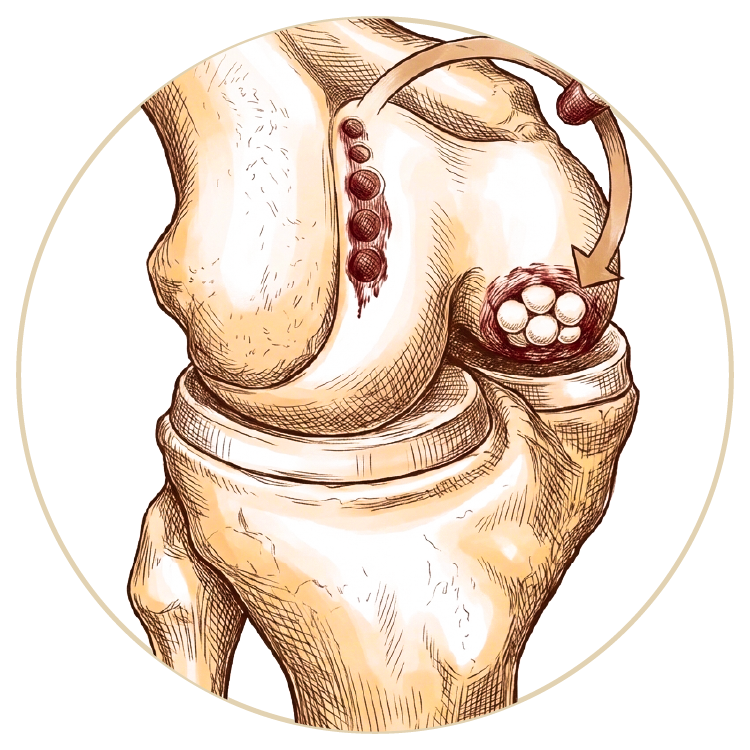
Cartilage transplantation is a biologically based surgical treatment method aimed at repairing limited or extensive cartilage damage on the articular surface.

Dr. Atakan Güvendiren
Orthopaedics and Traumatology · Istanbul
{ AI · initial information }
onlineLet's discuss your knee
AI answers do not replace a medical diagnosis.
The aim is to support regeneration of cartilage tissue by preserving the joint's natural structure, rather than completely replacing the damaged articular surface.
Could Your Knee Pain and Limited Movement Be Related to Cartilage Damage?
What is Cartilage Transplantation?
Cartilage transplantation is a biologically based surgical treatment method aimed at repairing limited or extensive cartilage damage on the articular surface. In this method, the aim is to support regeneration of cartilage tissue by preserving the joint's natural structure, rather than completely replacing the damaged articular surface.
Cartilage transplantation is an advanced treatment option particularly considered in weight-bearing joints such as the knee, ankle and occasionally the hip, before prosthetic replacement becomes necessary.
What is Cartilage Tissue and Why is it Important?
Cartilage is smooth and slippery tissue that covers the ends of bones. Because of this structure:
-
Joints move without friction
-
Load is distributed evenly
-
Movement is painless
However, because cartilage tissue lacks blood vessels, its capacity for self-renewal is limited. Therefore, any damage that occurs may progress over time.
Safe Movement with Cartilage Transplantation
Pain, catching sensation and movement restriction arising from cartilage damage in the knee joint can be managed with appropriate treatment approaches. In cases where conservative methods prove ineffective, cartilage transplantation is an effective surgical treatment option aimed at repairing the joint surface and restoring comfortable movement.
With appropriate treatment for cartilage problems, comfortable and smooth movement can be restored.
Effective Solution for Knee Function: Cartilage Transplantation
Cartilage transplantation is a surgical treatment method used in cases where cartilage tissue in the knee joint has been damaged. This condition can lead to pain, catching sensation, movement restriction and loss of function in the knee, significantly reducing quality of life. Rest, medication and physiotherapy are preferred in the initial stages. When sufficient benefit cannot be obtained from these methods, cartilage transplantation is applied as an effective surgical treatment option aimed at repairing the joint surface, reducing pain and restoring comfortable movement. Dr. Atakan Güvendiren
Conditions Requiring Cartilage Transplantation
Articular cartilage is vital tissue that enables bones to glide over each other without friction during movement. However, the regenerative capacity of cartilage tissue is quite limited. For this reason, in certain situations cartilage damage becomes progressive and surgical cartilage transplantation becomes an option.
Cartilage transplantation is a particularly effective treatment option in patients with localised and limited cartilage loss who have active lifestyle expectations.
Trauma-Related Cartilage Damage
Cartilage defects on the joint surface following sports injuries, falls or traffic accidents can lead to pain and loss of function over time. Cartilage transplantation yields successful results particularly in focal (localised) cartilage loss occurring in the knee, ankle and hip joints.
Non-Advanced Cartilage Wear
Cartilage transplantation is not suitable for patients with advanced osteoarthritis. However, if the overall structure of the joint is preserved but there is cartilage loss in a specific area, cartilage transplantation can preserve the joint's natural structure and delay the need for a prosthesis.
Cartilage Defects in Young and Active Patients
Particularly in young patients, cartilage transplantation provides significant benefit in cartilage damage causing pain during daily activities or sports. In this patient group the aim is:
-
To preserve joint function
-
To enable return to sport and active lifestyle
-
To prevent joint osteoarthritis that may develop in the future
Lack of Benefit from Previously Performed Treatments
Cartilage transplantation is considered in patients whose symptoms persist despite the following methods:
-
Medication therapies
-
Physiotherapy and exercise programmes
-
Intra-articular injections (PRP, hyaluronic acid etc.)
-
Simple surgical interventions such as microfracture
If pain and movement restriction persist despite these treatments, cartilage transplantation becomes an option as a more lasting solution.
Patients with Appropriate Joint Alignment and Ligament Structures
For the success of cartilage transplantation, not only the cartilage but also the overall biomechanics of the joint are important. The following conditions are generally sought:
-
Joint alignment to be largely normal
-
Ligament structures to be stable
-
Absence of infection or advanced arthritis
Appropriate patient selection directly affects the long-term success of cartilage transplantation.
Cartilage Lesions of the Knee, Ankle and Hip Joints
Cartilage transplantation is most commonly used for:
-
Cartilage lesions of the knee joint
-
Cartilage damage of the ankle talus
-
Selected cartilage defects of the hip joint
Limited cartilage loss in these joints yields encouraging results when treated with proper technique.
What is Cartilage Damage?
Cartilage damage is the deterioration, thinning or complete loss of the smooth and slippery cartilage tissue that covers the joint surfaces. Cartilage tissue enables bones to move painlessly and without friction over each other. Damage to this tissue adversely affects joint function, leading to pain, movement restriction and a decline in quality of life.
Because cartilage tissue has limited blood supply, its capacity for self-repair when damaged is quite low. For this reason, early diagnosis and correct treatment approach are of great importance.
What is the Function of Cartilage Tissue?
The basic functions of cartilage tissue are:
-
To act as a shock absorber on the joint surfaces
-
To reduce friction between bones during movement
-
To enable balanced and smooth joint movement
-
To distribute pressure in weight-bearing joints (such as knee, hip, ankle)
Deterioration of these functions can over time cause problems affecting the entire joint structure.
Why Does Cartilage Damage Occur?
Multiple factors can play a role in the development of cartilage damage:
-
Trauma and sports injuries
-
Repetitive strain on the knee, hip or ankle
-
Loss of joint load balance following meniscal tears or ligament injuries
-
Osteoarthritis of the joint
-
Rheumatologic diseases
-
Congenital structural abnormalities of the joint
-
Excessive load on joints due to obesity
What are the Signs of Cartilage Damage?
The signs of cartilage damage may vary depending on the location and degree of damage. The most commonly seen complaints are:
-
Joint pain (especially increasing with movement)
-
Difficulty when climbing stairs or squatting
-
Catching or locking sensation in the joint
-
Swelling and tenderness
-
Reduced range of motion
-
Stiffness when standing up after prolonged sitting
In Which Joints is Cartilage Damage Seen?
Cartilage damage most commonly occurs in weight-bearing and actively used joints:
-
Knee joint
-
Hip joint
-
Ankle
-
Shoulder and elbow joints
In particular, knee cartilage damage is a common occurrence in both young athletes and older individuals.
What Happens if Cartilage Damage Progresses?
Untreated or late-detected cartilage damage can over time lead to:
-
Osteoarthritis of the joint
-
Chronic pain
-
Significant restriction in mobility
-
Need for surgical intervention
can cause this.
For this reason, it is important to consult an orthopaedic specialist at an early stage if cartilage damage is suspected.
When Should You See a Doctor?
Specialist assessment is strongly recommended in the following situations:
-
Joint pain lasting longer than 2–3 weeks
-
Movement restriction affecting daily life
-
Knee or hip pain after sports that does not resolve
-
Joint swelling and catching sensation
What are the Types of Cartilage Grafting?
Cartilage damage can seriously affect joint health and reduce quality of life. Today, cartilage grafting is applied using different techniques, and each approach is tailored to the patient's condition, age and lifestyle.
Autologous Cartilage Grafting
Autologous cartilage grafting is a method using the patient's own cartilage tissue. It is typically preferred for repairing localised cartilage damage in the knee and hip joints.
Advantages:
-
No risk of immune rejection.
-
Provides the most natural healing process.
-
Long-term outcomes are highly successful in suitable patients.
Limitations:
-
Limited quantity of cartilage can be harvested from the donor site.
-
May not always be sufficient for extensive cartilage damage.
The approach frequently emphasised by competing clinics is that this method is particularly ideal for young and active patients.
Allograft Cartilage Grafting
Allograft grafting is a method using donor cartilage tissue. It is particularly preferred for extensive cartilage damage or where sufficient tissue is unavailable for autologous grafting.
Indications:
-
Cartilage defects with large surface areas.
-
Recurrent cartilage damage or failure of previous grafts.
Risks:
-
Immune system reactions and tissue rejection.
-
Rarely, risk of infection.
This method can be applied safely with proper donor selection and modern laboratory techniques.
Stem Cell-Assisted Cartilage Grafting
Stem cell-assisted grafting is an innovative approach in cartilage regeneration. Stem cells have the capacity to repair damaged cartilage tissue and produce new cartilage.
Role of Stem Cells:
-
Promotes cartilage tissue production in the damaged area.
-
Supports the healing process by reducing inflammation.
Future-Oriented Innovative Treatments:
-
Stem cell technology, combined with minimally invasive methods, can provide faster and more effective results.
-
The goal is to achieve both aesthetic and functional recovery through personalised treatment protocols.
When cartilage grafting techniques are combined with proper patient selection and current medical approaches, they can protect joint health long-term and improve quality of life.
How is Cartilage Grafting Surgery Performed?
Cartilage grafting surgery is an advanced surgical method applied to protect joint health and repair damaged cartilage. Proper patient selection and meticulous process management are critical for a successful outcome.
Pre-operative Assessment and Suitable Patient Selection
Before surgery, the patient's general health status, joint structure and the size of cartilage damage are assessed in detail. The location and depth of damage are determined using methods such as MRI and arthroscopic imaging. This stage both increases surgical success and reduces the risk of complications.
Surgical Stages
The cartilage grafting process consists of several basic steps:
Chondrocyte Biopsy
A small sample is taken from the patient's own cartilage tissue. These chondrocytes form the basis of cells that will be multiplied in a laboratory setting.
Cell Multiplication Process
The harvested chondrocytes are multiplied in special laboratory conditions and the necessary number is reached. This process typically takes several weeks, with quality control tests applied at each stage.
Grafting (Implantation) Procedure
The multiplied chondrocytes are transferred to the damaged cartilage area. During grafting, cells are fixed to the joint surface and integration with natural cartilage tissue is ensured.
Arthroscopic versus Open Surgical Techniques
-
Arthroscopic Technique: Using a minimally invasive method, grafting is performed through small incisions into the joint. It provides faster healing and lower infection risk.
-
Open Surgical Technique: Preferred for more extensive cartilage damage. It allows the surgeon direct visualisation of the area and provides better control over implantation in large defects.
Cartilage grafting surgery can be applied safely and effectively with modern techniques. With proper patient selection, appropriate surgical method and follow-up, joint health can be protected long-term.
What is the Recovery Process After Cartilage Grafting?
The recovery process after cartilage grafting affects the patient's quality of life as much as the success of the surgery. With regular follow-up and proper rehabilitation, joint functions can be preserved long-term.
Hospital Follow-up and Length of Stay
Cartilage grafting is typically completed with 1–3 days of hospital admission. In the first days, priority is given to managing pain, joint swelling and infection risk. The surgeon closely monitors the condition of the grafted area and general health parameters.
Physiotherapy and Rehabilitation
Physiotherapy is one of the most critical stages of the recovery process:
-
First weeks: Gentle movements and passive joint exercises support the adaptation of cartilage tissue.
-
Weeks 2–6: Gradual increase in weight-bearing and activity.
-
- After this week: Strengthening exercises, balance and flexibility work are added.
The rehabilitation programme is personalised according to the patient's age, size of cartilage damage and surgical technique used.
Expected Functional Recovery Timeline
-
Weeks 0–6: Reduction in swelling and pain, mild joint mobility.
-
Weeks 6–12: Improvement in daily activities, gradual transition to light sports activities.
-
Months 3–6: Integration of cartilage tissue, marked increase in joint function.
-
Months 6–12: Full functional recovery and return to normal life activities.
This process reaches maximum success with regular patient check-ups and adherence to the rehabilitation programme.
Frequently Asked Questions
undefined
undefined
undefined
undefined
undefined
undefined
undefined
undefined
undefined
undefined
undefined
undefined
undefined
undefined
undefined
undefined
undefined
undefined
undefined
undefined
undefined
undefined
undefined
undefined
undefined
undefined





Schedule an Appointment
Your information will be sent to Dr. Atakan Güvendiren's clinic. A response will be provided within 24 hours.