
Meniscal Transplant
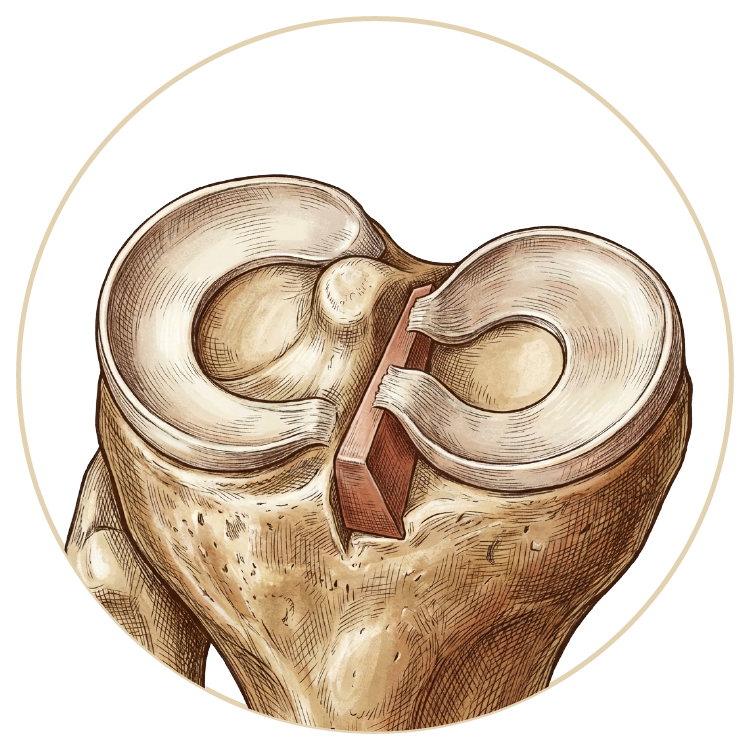
Meniscal transplantation is an advanced surgical procedure aimed at replacing missing meniscal tissue in the knee joint when a large portion or all of the meniscus has been lost, using a biological graft.

Dr. Atakan Güvendiren
Orthopaedics and Traumatology · Istanbul
{ AI · initial information }
onlineLet's discuss your knee
AI answers do not replace a medical diagnosis.
The main goal of meniscal transplantation is to protect the knee joint, reduce pain, and slow the development of knee osteoarthritis in the long term.
Could Knee Pain and Limited Movement Be Due to Meniscal Loss?
What is Meniscal Transplantation?
Meniscal transplantation is an advanced surgical procedure aimed at replacing missing meniscal tissue in the knee joint when a large portion or all of the meniscus has been lost, using a biological graft. It is particularly applied in patients who have previously had the meniscus removed and continue to experience knee pain as a result.
The main goal of meniscal transplantation is to protect the knee joint, reduce pain, and slow the development of knee osteoarthritis in the long term.
Conditions Requiring Meniscal Transplantation
Meniscal transplantation is considered in the following conditions:
-
Prior removal of a large portion or all of the meniscus
-
Persistent knee pain in young and active patients
-
Loss of knee function restricting daily life and sports activities
-
Signs of early cartilage damage related to meniscal loss
-
Knee pain that does not resolve despite standard treatment
-
Locking in the knee, sensation of giving way, or pain that increases with weight-bearing
Particularly in patients who underwent meniscectomy at a young age, meniscal transplantation is an important option to prevent knee osteoarthritis in the advancing years.
Safe Movement with Meniscal Transplantation
Pain, catching and limited movement resulting from meniscal loss in the knee joint can be managed with appropriate treatment approaches. In cases where conservative methods provide no benefit and meniscal tissue is insufficient, meniscal transplantation is an effective surgical treatment option aimed at restoring knee function and enabling comfortable movement.
In cases of meniscus loss; appropriate treatment can restore comfortable and fluid movement.
Effective Solution for Knee Function: Meniscus Transplantation
Meniscus transplantation is a surgical treatment method applied in cases where meniscus tissue in the knee joint has suffered severe damage or has been lost. This condition can cause pain, catching sensations, restricted movement and loss of function in the knee, significantly reducing quality of life. Rest, medication and physiotherapy are preferred as first-line treatments. When sufficient benefit cannot be obtained from these methods, meniscus transplantation is applied as an effective surgical treatment option aimed at restoring knee function, reducing pain and providing comfortable movement. Dr. Atakan Güvendiren
Who Is Meniscus Transplantation Suitable For?
The suitable patient profile for meniscus transplantation is as follows:
-
Under 50 years of age
-
Active lifestyle
-
Stable knee ligaments (particularly intact or repaired anterior cruciate ligament)
-
No advanced knee osteoarthritis
-
No knee axis deformity (varus/valgus) or deformity that can be corrected
Meniscus transplantation is not recommended in patients with advanced knee osteoarthritis.
When Is Meniscus Transplantation Not Needed?
Meniscus transplantation is not suitable in the following situations:
-
Advanced-stage knee osteoarthritis
-
Uncontrolled ligament instability
-
Severe knee deformities
-
Infection or rheumatic joint disease
-
Elderly patients with low activity expectations
How Is the Meniscus Transplantation Decision Made?
The meniscus transplantation decision is made following:
-
Detailed patient history
-
Physical examination
-
MR imaging
-
Assessment of knee biomechanics
and is individualised for each person. The aim is not only to reduce pain, but also to protect the knee joint in the long term.
Why Is Meniscus Transplantation Important?
The meniscus is a vital structure that distributes load in the knee joint and protects cartilage. The absence of the meniscus:
-
Accelerates cartilage wear
-
Predisposes to knee osteoarthritis
-
Increases the need for joint replacement in the long term
Therefore, meniscus transplantation performed at the right time in suitable patients is regarded as a preventive surgery that protects knee health.
How Is Meniscus Transplantation Surgery Performed?
Meniscus transplantation surgery is the procedure of replacing the meniscus tissue that has been previously removed or has completely lost its function in the knee joint with a donor meniscus prepared in appropriate dimensions. The aim is to restore the biomechanics of the knee joint, prevent cartilage damage and reduce pain.
This surgery is a highly sensitive, advanced orthopaedic procedure and is individually planned for each patient.
Preparation Before Meniscus Transplantation Surgery
A detailed evaluation is performed prior to surgery:
-
Physical examination
-
Knee MR imaging
-
If necessary, long-axis radiographs (knee axis assessment)
-
Assessment of ligament structures (ACL, MCL, etc.)
The donor meniscus is selected to be precisely matched to the patient's knee measurements. This fit directly affects the success of the surgery.
Meniscus Transplantation Surgery Stages
Arthroscopic Entry
The surgery is usually performed using a closed (arthroscopic) method. A camera and specialised surgical instruments are inserted through small incisions into the knee.
Intra-Articular Knee Cleaning
Remnants of the old meniscus are removed from inside the knee. Cartilage surfaces and ligament structures are examined.
Donor Meniscus Preparation
The meniscus to be transplanted:
-
Is shaped according to the patient's knee measurements
-
Is prepared using bone-block or soft tissue technique
Meniscus Placement
The prepared meniscus is placed anatomically in the knee joint and is:
-
Special sutures
-
Bone fixation techniques
are used to secure it firmly.
Stability Check
The meniscus is verified to function in the correct position during knee movements, and the surgery is concluded.
How Long Does Meniscus Transplantation Surgery Take?
- Average duration: 1.5 – 2.5 hours
If ligament repair or axis correction surgery is to be performed in the same session, the duration may be prolonged.
What Types of Anaesthesia Are Used for Meniscus Transplantation Surgery?
-
General anaesthesia is usually applied
-
Spinal anaesthesia may be preferred in some patients
The anaesthesia method is determined according to the patient's general health status.
How Long Is Hospitalisation After Meniscus Transplantation Surgery?
-
Most patients stay in hospital for 1–2 days
-
On the first day a knee brace and crutches are used.
Expected Results After Meniscus Transplantation Surgery
With appropriate patient selection and correct surgical technique:
-
Pain reduction
-
Marked improvement in knee function
-
Slowing of cartilage damage
are achieved at a high rate.
The most important factors affecting success are:
-
Patient age
-
Knee cartilage condition
-
Adherence to rehabilitation
-
Surgeon's experience
What Is the Purpose of Meniscus Transplantation Surgery?
The primary objectives of this surgery are:
-
To reduce knee pain
-
To improve knee function
-
Slowing cartilage wear
-
Delaying early knee replacement needs
Recovery Process After Meniscus Transplant Surgery
The recovery process after meniscus transplant surgery is the most critical phase directly affecting the success of the operation. This process requires time and controlled rehabilitation for the meniscus to adapt to the knee, for the sutures to hold, and for the joint to function properly again.
The recovery process varies depending on the patient's age, the overall condition of the knee, and adherence to physiotherapy, but typically takes between 6 and 12 months on average.
First Days After Meniscus Transplant Surgery (0–2 Weeks)
The early post-operative period is a protection phase.
The knee is usually immobilised with a special knee brace
Walking with crutches without weight bearing or with limited weight bearing is recommended
To reduce swelling and pain:
-
Cold application
-
Leg elevation
-
Medication prescribed by the doctor is used
During this period, sudden movements that would strain the knee must be avoided to allow the meniscus to settle into place.
Between 2–6 Weeks: Controlled Movement Phase
The aim during this period is to safely increase the knee's range of motion.
-
Physiotherapy is started
-
Passive and active knee movements are gradually increased in a controlled manner
-
Muscle strengthening exercises (especially quadriceps) are performed
-
Weight bearing is gradually increased in stages
Squatting, kneeling positions and sudden turning movements are not recommended at all.
Between 6–12 Weeks: Functional Strengthening
This phase is when the meniscus begins to adapt to the knee.
-
Crutches are abandoned
-
Balance and proprioception exercises are added
-
Return to daily activities begins
-
Light-paced walking is permitted
If pain or swelling in the knee increases, the exercise level should be adjusted again.
Between 3–6 Months: Transition to Active Life
-
Muscle strength increases markedly
-
Knee stability improves
-
Light sporting activities (swimming, stationary cycling) can be started
-
Steady-paced running can be attempted in a controlled manner
High-impact sports must still be avoided during this period.
6–12 Months: Return to Sport and Full Recovery
-
The meniscus tissue becomes fully adapted to the knee
-
For athletic patients, specialised sports rehabilitation is provided
-
Contact sports such as football and basketball are resumed with approval from the doctor and physiotherapist
Early return to sport after meniscus transplant can jeopardise the success of the operation.
What Should Be Taken Care Of After Meniscus Transplant?
-
Regular adherence to the physiotherapy programme
-
Avoiding excessive weight gain
-
Not neglecting knee-protective exercises
-
Not missing follow-up examinations
When Does Recovery After Meniscus Transplant Complete?
-
Return to daily activities: 2–3 months
-
Sporting activities: 6–12 months
-
Biological adaptation of the meniscus: approximately 1 year
What Factors Affect Recovery After Meniscus Transplant?
-
Patient age
-
The degree of cartilage damage
-
The condition of the knee ligaments
-
Adherence to physiotherapy
-
Surgeon's experience
What Should Not Be Done After Meniscus Transplant Surgery?
Errors made during the recovery process after meniscus transplant surgery can adversely affect the attachment of the transplanted meniscus and jeopardise the success of the operation. For this reason, movements and habits to be avoided during the recovery period are of great importance.
Putting Weight on the Knee in the Early Stage
In the first weeks after surgery:
-
Crutches should not be abandoned
-
Full weight should not be placed on the knee without doctor's permission
-
Long periods of standing should be avoided
Early weight bearing can cause damage to the meniscus sutures.
Squatting and Kneeling
-
Using a traditional squat toilet
-
Kneeling positions
-
Deep squatting
are not recommended at all after meniscus transplant, especially in the first 3–4 months.
Sudden Turning and Jumping Movements
-
Rapid direction changes
-
Jumping, hopping
-
Sudden movements on slippery surfaces
create high shear forces on the transplanted meniscus and increase the risk of tearing.
Neglecting Physiotherapy or Exercising on Your Own
-
Stopping physiotherapy early
-
Uncontrolled performance of exercises found on the internet
-
Continuing exercise despite pain
adversely affect the recovery process.
The rehabilitation programme should be personalised.
Early Return to Sport
-
Running
-
Contact sports such as football, basketball and tennis
-
Squats and lunges with weights
must not be done without doctor's approval.
Neglecting Knee Bracing and Support
-
Not wearing the prescribed knee brace or support
-
Removing it before the recommended period
may adversely affect meniscus stability.
Prolonged Immobility
Although excessive loading is undesirable:
-
Continuous bed rest
-
Not moving the knee at all
may lead to muscle loss and joint stiffness.
What matters is controlled and proper movement.
Weight Gain and Poor Nutrition
-
Excessive weight gain
-
Poor nutrition lacking protein and collagen
increases the load on the knee joint and reduces the success of meniscus repair.
Missing Follow-up Appointments
-
Not attending routine doctor's appointments
-
Delaying MRI or clinical evaluations
may result in delayed detection of potential problems.
Ignoring Pain and Swelling
-
Increasing pain
-
Persistent swelling
-
Sensation of locking
must always be reported to your doctor.
What are the Most Common Mistakes After Meniscus Repair?
-
Returning to normal activity too early, thinking "my pain is gone"
-
Rushing into sport
-
Neglecting physiotherapy
-
Underestimating knee protection measures
Frequently Asked Questions
undefined
undefined
undefined
undefined
undefined
undefined
undefined
undefined
undefined
undefined
undefined
undefined
undefined
undefined
undefined
undefined
undefined
undefined
undefined
undefined
undefined
undefined
undefined
undefined
undefined
undefined
undefined
undefined
undefined
undefined
undefined
undefined
undefined
undefined
undefined
undefined
undefined
undefined
undefined
undefined
undefined
undefined





Schedule an Appointment
Your information will be sent to Dr. Atakan Güvendiren's clinic. A response will be provided within 24 hours.