
Posterior Cruciate Ligament Surgery
Posterior cruciate ligament (PCL) surgery is a surgical treatment applied in cases where the posterior cruciate ligament in the knee joint is damaged or completely torn.

Dr. Atakan Güvendiren
Orthopaedics and Traumatology · Istanbul
{ AI · initial information }
onlineLet's discuss your knee
AI answers do not replace a medical diagnosis.
PCL surgery is usually preferred in patients where conservative treatment does not provide sufficient recovery or where there is significant knee instability.
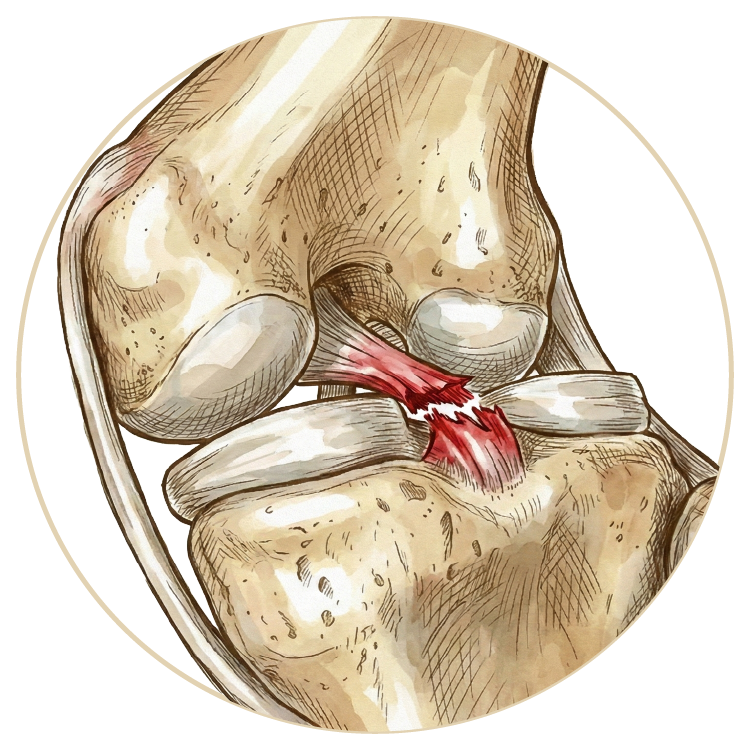
Does the Sensation of Your Knee Sliding Backwards Affect Your Daily Life?
What Is Posterior Cruciate Ligament (PCL) Surgery?
Posterior cruciate ligament (PCL) surgery is a surgical treatment applied in cases where the posterior cruciate ligament in the knee joint is damaged or completely torn. The PCL is a critical ligament in the knee joint that protects posterior and anterior stability. When this ligament is damaged, instability, pain and loss of joint function can occur in the knee.
PCL surgery is usually preferred in patients where conservative treatment does not provide sufficient recovery or where there is significant knee instability. Surgical intervention is necessary to restore stability to the knee joint and prevent damage to the meniscus and cartilage tissue.
Safe Movement with Posterior Cruciate Ligament Surgery
Instability in the knee joint resulting from a posterior cruciate ligament tear can be managed with appropriate treatment approaches. When conservative methods do not provide benefit, posterior cruciate ligament surgery is an effective surgical treatment option aimed at restoring knee stability and enabling safe movement.
"In posterior cruciate ligament problems, safe and balanced movement can be restored with appropriate treatment."
An Effective Solution for Knee Stability: Posterior Cruciate Ligament Surgery
Posterior cruciate ligament surgery is a surgical treatment method applied to patients with instability and loss of function resulting from ligament tearing in the knee joint. This condition can lead to a sensation of the knee sliding backwards, insecurity, pain and movement restriction, significantly reducing quality of life. Rest, medication and physiotherapy are preferred as first-line treatments. When these methods do not provide sufficient benefit, posterior cruciate ligament reconstruction is an effective surgical treatment option aimed at restoring knee stability, enabling safe movement and returning to active life. Dr. Atakan Güvendiren
What Is the Posterior Cruciate Ligament (PCL) and What Does It Do?
The posterior cruciate ligament (PCL) is one of the critical ligaments located at the back of the knee joint that provides knee stability. The PCL, in particular, prevents the tibia (shin bone) from sliding backwards and ensures the knee functions properly. Like the anterior cruciate ligament (ACL), the PCL plays a vital role in preserving natural knee movement and joint stability.
Primary Functions of the PCL:
-
Knee stability: Prevents the knee from sliding backwards, particularly during squatting and turning movements.
-
Joint function: Enables the knee joint to work at the correct angle, supporting safe movement in daily activities.
-
Protection of joint health: When the PCL is damaged, instability develops in the knee, which increases the risk of meniscus and cartilage tissue damage.
PCL rupture or injury usually occurs as a result of traffic accidents, sports injuries or high-energy trauma. People experiencing PCL damage may experience pain, swelling and movement restriction in the knee. Therefore, understanding the function of the PCL is critical for both early diagnosis and planning of surgical or conservative treatment.
How is the Knee Affected Without the Posterior Cruciate Ligament (PCL)?
The posterior cruciate ligament (PCL) is a critical ligament that provides stability to the knee. When this ligament is damaged or completely torn, the knee joint experiences backward slipping of the tibia, instability and loss of function. When the PCL is non-functional, the mechanical imbalance in the knee causes serious problems for both daily activities and sports.
Effects That Occur in the Knee Without PCL:
Knee Instability
-
Backward slipping of the tibia (shin bone)
-
A feeling of "looseness" in the knee and loss of confidence during sudden directional changes
Pain and Swelling
-
Increased pain due to uneven load distribution on the joint surface
-
Swelling after prolonged weight-bearing
Loss of Function
-
Difficulty with squatting, climbing or descending stairs, and rapid directional changes
-
Reduced performance in sports and daily activities
Risk of Meniscus and Cartilage Damage
-
When the knee joint is unstable, extra stress is placed on the meniscus and cartilage tissue
-
Over time, the risk of osteoarthritis developing increases
Long-term Complications
-
Chronic pain in the joint
-
Deformity and limited movement in the knee
-
At advanced stages, surgical intervention (PCL reconstruction or prosthesis) may be necessary
During Which Movements Is the Posterior Cruciate Ligament (PCL) More Active?
The posterior cruciate ligament (Posterior Cruciate Ligament – PCL) is a critical ligament in the knee joint that provides posterior stability and prevents backward slipping of the tibia. The PCL comes under much greater load, especially during certain movements, and ensures the knee functions properly.
Movements During Which the PCL Is Active:
Knee Flexion (Bending)
-
When the knee is bent, the tibia tends to move backward.
-
The PCL prevents this backward slipping and provides joint stability.
Squatting and Sitting Positions
- During a squat or crouching movement, the posterior cruciate ligament balances the load on the knee joint, allowing the knee to move safely.
Weight-bearing and Descending Stairs
-
As body weight is placed on the knee joint, the PCL actively stabilises the joint.
-
It plays a critical role especially during stair descent or movement on sloped ground.
Sudden Directional Changes and Sports Movements
-
During sudden directional changes in sports such as football, basketball and skiing, it prevents the tibia from slipping backward.
-
With PCL damage, instability and pain occur during such movements.
Providing Balance Under Load
- The PCL limits both forward and backward movements in the knee joint, ensuring balanced contact of the joint surface.
What Causes Posterior Cruciate Ligament (PCL) Tear?
Posterior cruciate ligament (Posterior Cruciate Ligament – PCL) tear results in loss of posterior stability in the knee joint and serious functional disorders. PCL tears usually occur as a result of high-energy trauma or sudden strain.
Main Causes of PCL Tear:
Direct Trauma (Anterior Blow)
-
When the knee receives a direct blow to the front, the tibia is pushed backward and the PCL can tear.
-
Traffic accidents, falls, or collisions during sports are the most common causes.
Sudden Knee Bending or Loading
-
When the knee is suddenly and excessively bent or suddenly loaded, the PCL can stretch and tear.
-
Sports such as football, basketball and skiing are particularly risky.
Trauma with Anterior Cruciate Ligament (ACL) and Other Ligament Damage
- Multiple ligament injuries (ACL, MCL) increase the load on the PCL and raise the risk of tearing.
Chronic Micro-trauma to the Knee
- Repeated strain, particularly from squatting or weight-bearing movements, can cause wear and weakening of the PCL in the knee joint.
Falls from Height or Traffic Accidents
-
PCL is usually torn suddenly when the tibia is pushed backward.
-
This usually results in both ligament and cartilage damage to the joint.
What Are the Symptoms of Posterior Cruciate Ligament (PCL) Tear?
Posterior cruciate ligament (Posterior Cruciate Ligament – PCL) tear results in loss of posterior stability in the knee joint and restricted movement. PCL injuries sometimes start with mild symptoms, but most patients experience temporary or persistent instability, pain and loss of function in the knee.
Most Common Symptoms of PCL Tear:
Backward Slipping or Looseness Sensation in the Knee
-
The tibia can move backward on the femur.
-
This is particularly noticeable during stair descent or squatting.
Pain and Swelling
-
Sudden pain and swelling develop in the knee after the injury.
-
In some patients, pain can start mildly and may hamper daily activities.
Restrictions in Knee Movements
-
The knee may not be able to bend fully or straighten completely.
-
Difficulty is experienced when squatting, sitting, or descending stairs.
Locking or Catching Sensation
-
Sudden "catching" or locking of the knee during movement may occur.
-
It is more pronounced when accompanied by meniscus or cartilage damage.
Delayed Symptoms
-
Some PCL tears produce mild symptoms initially and become more apparent a few days later.
-
Instability increases during sports or weight-bearing activities.
Joint Sounds
- A "pop" or "click" sound may be heard as the knee moves.
How Is Anterior Cruciate Ligament (ACL) Tear Diagnosed?
Anterior cruciate ligament (Anterior Cruciate Ligament – ACL) tear is one of the most common sports-related knee injuries, causing sudden pain and instability in the knee. Accurate diagnosis is critical for initiating appropriate treatment and the recovery process.
Methods Used in ACL Tear Diagnosis:
Physical Examination
-
The doctor assesses forward slipping and instability in the knee.
-
ACL function is checked using the Lachman test, Pivot Shift test and anterior drawer test.
-
In acute injury, swelling and tenderness are observed in the joint.
Imaging Methods
-
MR (Magnetic Resonance) Imaging: Shows ACL tears, meniscus and cartilage damage with high accuracy.
-
X-ray: Assesses bone structure, particularly used for detecting bone avulsions.
-
In some cases, ultrasound may also be helpful.
Patient History and Symptoms
-
Sudden "pop" sound heard in the knee
-
Swelling and pain following injury
-
Feeling of the knee giving way during sudden direction changes or stopping
-
Pre-existing knee injuries and sports history
Functional Tests
-
Gait and weight-bearing tests
-
Assessment of knee stability through sports activity simulation
Who Requires Posterior Cruciate Ligament (PCL) Surgery?
The posterior cruciate ligament (PCL) is a critical ligament that provides posterior stability in the knee. When this ligament is damaged or completely torn, it results in knee instability, pain, and loss of function. PCL surgery is not required for every PCL injury; it is preferred in patients who meet specific conditions and criteria.
Conditions Requiring PCL Surgery:
Severe Knee Instability
-
Patients experiencing a feeling of the knee shifting backward and persistent laxity
-
Loss of confidence during daily activities or sports
Multiple Ligament Injuries
-
Patients who have sustained trauma affecting the anterior cruciate ligament (ACL), medial collateral ligament (MCL), or lateral ligaments
-
Conditions where overall knee stability is compromised
Patients Not Responding to Conservative Treatment
- Those in whom pain and instability persist despite physiotherapy, exercise, and supportive methods
Highly Active Individuals and Athletes
-
Those who participate in sports requiring sudden direction changes, such as football, basketball, and skiing
-
Situations where knee stability is critical for return to sport
Conditions with High Risk of Joint Damage
-
Patients at high risk of damage to the meniscus or cartilage tissue
-
Those with a high likelihood of developing osteoarthritis long-term
How Is Posterior Cruciate Ligament (PCL) Surgery Performed?
Posterior cruciate ligament (PCL) surgery is performed in patients who have lost posterior stability in the knee, with the aim of restoring the ligament's function and re-establishing normal mechanical balance of the knee. PCL surgery is typically performed using arthroscopic methods, a minimally invasive surgical technique.
Steps of PCL Surgery:
Preparation and Anaesthesia
-
General or spinal anaesthesia is administered to the patient.
-
The knee is sterilised and properly positioned.
Arthroscopic Entry
-
A camera and surgical instruments are placed through small incisions into the knee.
-
Ligament damage, meniscus, and cartilage status are assessed in detail.
Graft Selection and Preparation
-
For PCL reconstruction, an autograft (from the patient's own tissue) or allograft (from donor tissue) is selected.
-
The graft is prepared to suit the anatomy of the knee.
Placement and Fixation of the Ligament
-
The damaged PCL is removed or repaired.
-
The graft is placed by drilling tunnels in the tibia and femur bones and is fixed with special screws or buttons.
Inspection and Closure
-
Range of motion of the knee is checked and stability is tested.
-
Incisions are sutured and the wound is dressed.
Operative Time and Hospital Stay
-
The average operative time is 1–2 hours.
-
Hospital stay is typically one night.
What Types of Grafts Are Used in Posterior Cruciate Ligament (PCL) Surgery?
Various types of grafts are used in posterior cruciate ligament (PCL) surgery to restore the ligament's function. Graft selection is determined by the patient's age, activity level, degree of PCL damage, and the surgeon's experience. Correct graft selection increases surgical success and knee stability.
Main Types of Grafts Used in PCL Surgery:
Autograft (Graft from Your Own Tissue)
-
This is the most frequently used type of graft.
-
It can be taken from the patellar tendon, hamstring tendons, or quadriceps tendon.
Advantage: Low infection risk and high biological compatibility.
Disadvantage: Mild pain or movement restriction may occur at the harvest site.
Allograft (Graft from a Donor)
- Tendon tissue from another person is used.
Advantage: Shorter operative time and less trauma to the surgical area.
Disadvantage: Though rare, there is a risk of infection and graft incompatibility.
Synthetic Grafts
- These are rarely preferred in PCL reconstruction.
Advantage: Provides strength and rapid placement.
Disadvantage: Long-term biological compatibility and durability may be limited.
Factors Considered in Graft Selection:
-
Patient's age and activity level
-
Previous knee surgeries or tendon status
-
Surgeon's experience and preferences
-
Rehabilitation plan and timeline for return to sport
What Is the Recovery Process After Posterior Cruciate Ligament (PCL) Surgery?
The re-establishment of stability in the knee and full functional recovery after posterior cruciate ligament (PCL) surgery is achieved through proper recovery. Rehabilitation is a critical part of surgical success and typically is a process lasting 6–12 months, beginning within the first days after surgery.
First Days After Surgery:
-
The knee is typically supported with a bandage or brace.
-
Ice application and elevation reduce swelling and pain.
-
Mild painkillers and anti-inflammatory medications may be given.
-
Gentle knee movements and passive exercises can begin in the lying position.
First 2–6 Weeks:
-
Weight-bearing and walking gradually begin; typically supported with crutches.
-
A physiotherapy programme increases knee flexion and extension.
-
Muscle strengthening and flexibility exercises begin.
6 Weeks – 3 Months:
-
The knee begins to stabilise, although high loads are avoided.
-
Light jogging and low-intensity sports activities are supported alongside physiotherapy.
-
Muscle strength and joint range of motion are increased.
3–6 months:
-
More intensive muscle strengthening and balance exercises are performed.
-
Transition to controlled training begins for athletes.
-
Instability in the knee is nearly completely resolved.
6–12 months:
-
Return to full sports activities usually occurs within 9–12 months.
-
All functions and stability of the knee joint are regained.
What If I Don't Have Posterior Cruciate Ligament (PCL) Surgery?
The posterior cruciate ligament (PCL) is an important ligament that provides posterior stability to the knee. Some people with PCL injury may not require surgery; however, without surgical treatment, there are negative effects and complications that can develop.
Conditions That May Develop If PCL Surgery Is Not Performed:
Knee Instability
-
The tibia may shift backwards and a sensation of looseness develops in the knee.
-
Instability increases during sudden directional changes or when bearing weight.
Pain and Swelling
-
When the knee joint is unstable, the load on the meniscus and cartilage increases.
-
This condition can lead to chronic pain and recurrent swelling.
Meniscal and Cartilage Damage
-
In an unstable knee, meniscal tears and cartilage damage are seen more frequently.
-
In the long term, the risk of early-onset osteoarthritis increases.
Loss of Function
-
Sports activities and heavy physical work become more difficult.
-
Problems may occur during daily activities such as climbing stairs up and down or squatting.
Chronic Complications
-
Deformity and restricted movement in the knee may develop.
-
In advanced stages, surgical intervention may become unavoidable.
Frequently Asked Questions
undefined
undefined
undefined
undefined
undefined
undefined
undefined
undefined
undefined
undefined
undefined
undefined
undefined
undefined
undefined
undefined
undefined
undefined
undefined
undefined





Schedule an Appointment
Your information will be sent to Dr. Atakan Güvendiren's clinic. A response will be provided within 24 hours.