
How Are Muscle Strains and Tears Assessed?
11 October 2026, 7 min
Editor: DijitalPi Content Team, Updated: 11 October 2026
In this article 08
- 01Are muscle strains, tears and ligament sprains the same?
- 02Why is the injury mechanism important?
- 03Which symptoms require emergency assessment?
- 04Can bruising, a sound or walking ability establish a diagnosis?
- 05How are examination and imaging planned?
- 06What should be avoided early on?
- 07How is return to sport assessed?
- 08Frequently asked questions
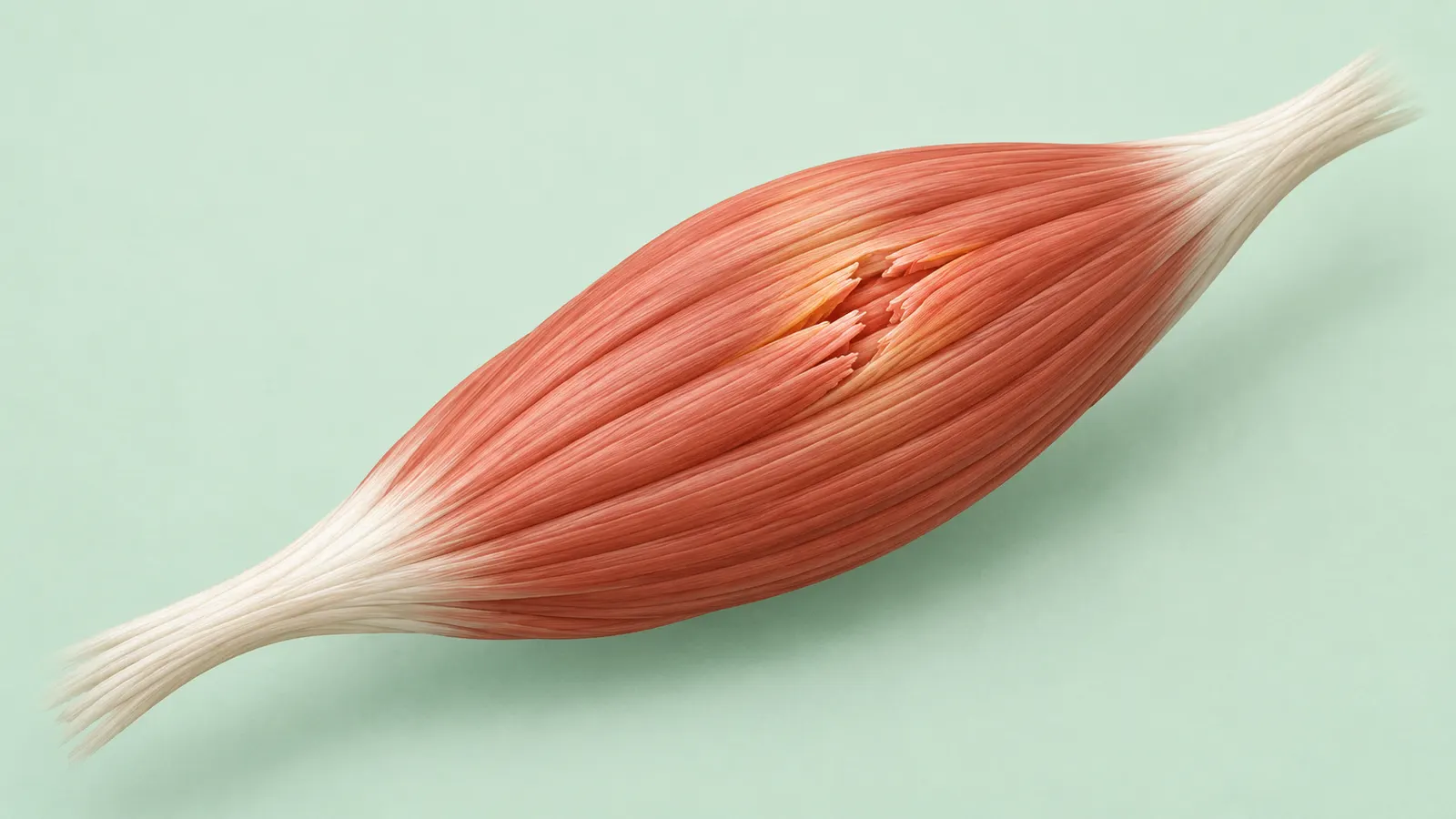
A muscle strain is an injury from stretching muscle or the tendon attaching it to bone, ranging from mild damage to a partial or complete tear. 'Strain or tear?' therefore does not always describe entirely separate diagnoses. Examination assesses the location and degree.
Summary: Muscle injuries may cause pain, tenderness, swelling or weakness. Bruising or its absence cannot establish severity. The event and affected movements guide assessment; imaging is sometimes needed. Sudden severe pain, rapidly increasing tightness, new numbness or marked weakness require emergency assessment. Return to sport depends on restored function, not less pain alone.
Are muscle strains, tears and ligament sprains the same?
These terms describe different tissues and injury patterns. A strain involves muscle or tendon; a sprain involves ligaments supporting a joint. A tear describes damage and may affect different tissues. Understanding this helps avoid directly applying someone else's advice to your injury.
| Term | Which structure is involved? | What does it mean? |
|---|---|---|
| Muscle strain | Muscle or tendon | An injury of varying severity caused by stretching |
| Partial tear | Tissues such as muscle, tendon or ligament | Disruption of some fibres |
| Complete tear | The entire injured structure | Complete disruption of tissue continuity |
| Ligament sprain | Joint ligaments | Injury involving stretching or tearing a ligament |
The AAOS soft tissue injury guide defines strain from mild stretching to a complete tear. This table is not for grading injuries at home. See ligament injuries for their separate assessment.
Why is the injury mechanism important?
Symptoms during acceleration, turning, lifting or impact help guide assessment. The team asks whether pain began suddenly, whether activity continued and which movement became difficult. The event matters; the exercise name alone does not show severity.
Prepare these details for examination:
- The movement during injury and where pain first appeared.
- Whether there was a fall, impact or unusual load.
- When swelling and bruising were noticed.
- Changes in walking, stairs, grip or lifting afterwards.
- Previous injuries in the area and medicines taken.
Describe the event rather than assuming it happened because you did not warm up. Premature conclusions can overlook another injury. Do not reproduce the painful movement to test yourself before examination.
Which symptoms require emergency assessment?
Some problems thought to be muscle injuries need emergency treatment. Do not wait with sudden severe pain, increasingly tense swelling, new numbness or marked weakness. Coldness or colour change also requires emergency assessment. These need not occur together; do not wait to see if medication helps.
Pain and tightness out of proportion to the injury may relate to increased pressure in the enclosed muscle compartment. The NHS compartment syndrome guide explains that acute onset requires emergency treatment.
- Emergency department / 112 if needed: Sudden severe pain, inability to use or bear weight on the limb, deformity, new numbness, marked weakness, coldness or paleness.
- Same-day assessment: Increasing swelling, significant bruising, symptoms limiting daily movement or an injury not improving as expected.
- Same-day assessment: One-sided calf pain or leg swelling, particularly without a clear injury. Do not automatically assume a muscle strain.
Call 112 for sudden breathlessness, chest pain or fainting. The NHS DVT guide explains vascular causes of leg pain and swelling. See swelling and warmth for more general symptoms.
Can bruising, a sound or walking ability establish a diagnosis?
Bruising, swelling, a sudden sound and loss of movement inform assessment, but no single sign establishes severity. No bruising does not exclude injury, and walking does not establish sport safety. Tell the team how symptoms change.
Comparison with the other limb can help observation, but avoid forceful self-testing. 'No sound means no tear' or 'bruising means surgery' cannot replace examination.
Ask which changes to report rather than which symptom allows self-diagnosis. Describe changing movement capacity, new swelling and the pain's course together.
How are examination and imaging planned?
The doctor assesses location, tenderness, movement and function, considering muscle, tendon, ligament and bone causes. Findings may warrant ultrasound, MRI or X-rays if bone injury is suspected. Not every muscle symptom needs identical imaging; tests answer questions that affect treatment.
Ask which tissue a proposed test examines and how the result may change treatment. A report needs clinical interpretation; one term cannot set a return-to-sport date.
The trauma and sports injuries page outlines assessment of different injuries. Bring information about your sport, work movements and daily needs to help tailor the plan.
What should be avoided early on?
First stop the aggravating activity and determine the need for assessment. Stretching through pain, strong massage or trial training is inappropriate. Do not apply simple-injury advice to delay care for emergency symptoms. Painkillers do not remove the need for examination.
The NHS sprains and strains guide covers early protection and activity adjustment. If cold is advised, avoid direct skin contact and clarify duration and technique with the team. Bandages or supports must not impair circulation.
Do not start, stop or change medicine doses yourself. Consult a doctor or pharmacist about pain control, especially with other conditions or regular medicines. If an aid is needed, correct use should be demonstrated.
How is return to sport assessed?
Returning to sport requires reassessment of movement, strength and sport-specific function as well as pain. Walking differs from running, jumping or sudden turning. Progress activity with the doctor and physiotherapist's plan. No single number of days or weeks applies to every muscle injury.
Prepare these questions for follow-up:
- Which movements can I do now, and which should wait?
- Do return-to-work and return-to-training criteria differ?
- Which symptoms during increased load mean I should stop and report them?
- Do I need another check before full participation?
Complete tears and certain tendon injuries require separate treatment discussion. 'Every tear needs surgery' and 'all muscle injuries heal themselves' are unsuitable generalizations. If surgery is considered, discuss individual benefits and risks including infection, bleeding, nerve injury, stiffness and incomplete functional recovery.
Frequently asked questions
How many days does a muscle strain take to heal?
Timing depends on the tissue, severity and functional needs. Less pain does not mean all tissues recover together. Work and sport may resume at different stages. Follow-up considers safe movements and response to load before the calendar.
Does no bruising rule out a muscle tear?
No. History, pain location, strength and movement matter; skin appearance alone is insufficient. Seek assessment without waiting for bruising if new weakness, inability to use the limb or rapidly worsening pain occurs.
Can I resume the same training once pain stops?
One pain-free day does not determine readiness. Assess the sport's movements and loads and create a gradual programme with a doctor or physiotherapist. Clarify return criteria instead of taking medicine to suppress symptoms and testing your previous intensity.
Outcomes of any surgical or interventional procedure may vary from person to person.
This information is for educational purposes and does not replace diagnosis and treatment. Please consult your doctor about your symptoms.