
Knee Osteoarthritis
Knee osteoarthritis, known medically as osteoarthritis, is characterised by gradual wear and degeneration of the cartilage tissue in the knee joint.

Dr. Atakan Güvendiren
Orthopaedics and Traumatology · Istanbul
▶ When is Knee Replacement Surgery Performed? How Does the Surgical Process Progress?
{ AI · initial information }
onlineLet's discuss your knee
AI answers do not replace a medical diagnosis.
Short videos on the topic
All videos →Brief explanations on this topic from the clinic's YouTube channel. Total 4 videos.

Total Knee Replacement: Day 5 After Surgery – Early Recovery

What is Knee Replacement?

What Is Knee Replacement Surgery? Who Is It For?

Why is Knee Replacement Surgery Performed?
When cartilage is damaged, joint surfaces rub against each other; this leads to pain, swelling and restricted movement.
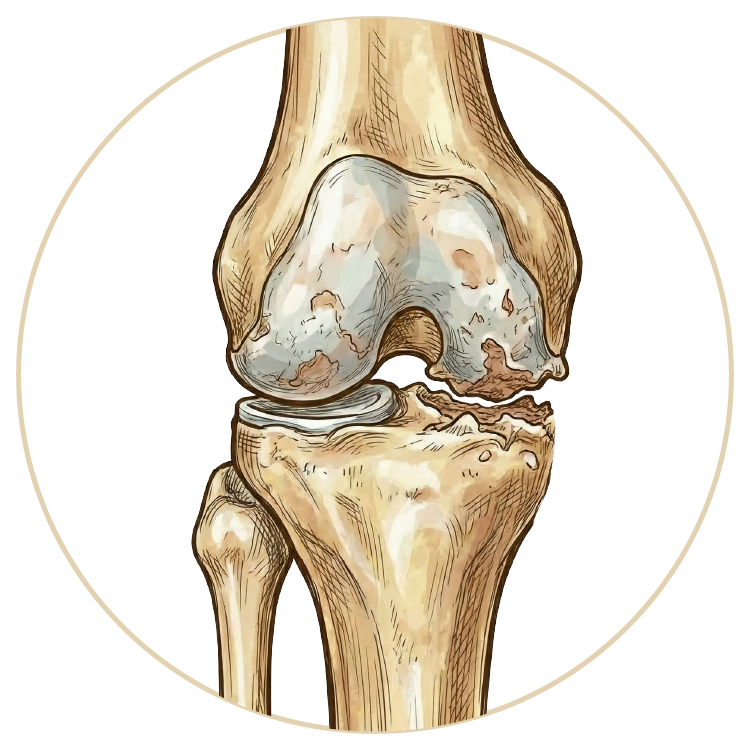
Is Osteoarthritis in Your Knee Limiting Your Movement?
What is Knee Osteoarthritis?
Knee osteoarthritis, known medically as osteoarthritis, is characterised by gradual wear and degeneration of the cartilage tissue in the knee joint. Cartilage covers the ends of bones, reduces joint friction and provides load distribution. When cartilage is damaged, joint surfaces rub against each other, leading to pain, swelling and restricted movement.
Main Types of Knee Osteoarthritis:
-
Degenerative knee osteoarthritis: Cartilage wear due to ageing
-
Post-traumatic osteoarthritis: Osteoarthritis developing after previous knee injury or surgery
-
Secondary osteoarthritis: Osteoarthritis resulting from rheumatological disease or metabolic disorders
Although knee osteoarthritis may start with mild symptoms in the early stages, if left untreated it can progress and significantly affect daily life.
Osteoarthritis Treatment: Confidence and Balance in the Knee
Loss of confidence in the knee joint due to osteoarthritis, along with pain and restricted movement, can be managed with appropriate treatment approaches. In cases where conservative methods provide insufficient benefit and joint surface wear is becoming pronounced, surgical and non-surgical treatment methods for osteoarthritis are effective options aimed at restoring knee function and enabling safe movement.
"In osteoarthritis, with appropriate treatment safe and balanced movement can be restored."
Treatments Supporting Movement in Knee Osteoarthritis
Knee osteoarthritis can result in pain, stiffness, restricted movement and loss of function due to gradual wear of cartilage tissue on the joint surface. This can significantly reduce quality of life. Rest, medication and physiotherapy are preferred in the first instance. When these methods do not provide sufficient benefit, surgical and non-surgical treatment methods for osteoarthritis are effective options aimed at reducing pain, increasing joint movement and enabling comfortable movement. Dr. Atakan Güvendiren
What are the Symptoms of Knee Osteoarthritis?
Symptoms of knee osteoarthritis typically begin gradually and worsen over time. Early detection increases treatment options and prevents progressive osteoarthritis.
Most Common Symptoms of Knee Osteoarthritis:
Pain and stiffness:
-
Stiffness in the knee, particularly in the morning or after sitting for long periods
-
Increased pain when climbing stairs, squatting or during long walks
Swelling and joint tightness:
-
Swelling and fullness around the joint
-
Stiffness in the joint after prolonged inactivity
Catching and locking sensation:
-
Catching or locking during knee movement
-
Sudden restricted movement due to loose cartilage fragments within the joint
Loss of function:
-
Difficulty walking and with daily activities
-
Reduced weight-bearing capacity in the knee
Advanced osteoarthritis findings:
-
Noise from the knee (cracking/crepitus)
-
Pain and restricted movement becoming persistent
Why Does Knee Osteoarthritis Occur?
Knee osteoarthritis results from disruption and wear of the natural structure of joint cartilage. The causes of osteoarthritis typically result from a combination of several factors.
Main Causes of Knee Osteoarthritis:
Ageing and Degeneration
-
Cartilage tissue loses its elasticity with age and its water content decreases.
-
Over time, wear and friction on the joint surface increase.
Excess Weight and Joint Load
-
Excess weight places particular strain on the knee joint.
-
Each 1 kg of excess body weight exerts approximately 3–4 kg of additional load on the knee joint.
Previous Knee Injuries
-
Cartilage damage may develop after meniscal tear, anterior cruciate ligament (ACL) injury or fractures.
-
Uneven load distribution in the knee following trauma creates a foundation for osteoarthritis.
Genetic and Hereditary Factors
-
Risk is higher in people with a family history of osteoarthritis.
-
Structural joint abnormalities (bowlegs, knock-knees) increase cartilage loading.
Repetitive Micro-injuries and Occupational Loading
-
Prolonged squatting, stair climbing or intensive sports activities cause micro-injuries to the knee joint.
-
This leads over time to cartilage thinning and osteoarthritis.
Inflammatory and Metabolic Factors
-
Diseases such as rheumatoid arthritis or gout can adversely affect knee cartilage.
-
Diabetes and certain metabolic syndromes can impair cartilage health.
How is Knee Osteoarthritis Diagnosed?
Early detection of knee osteoarthritis results in more successful treatment. The diagnostic process involves physical examination, imaging and, where necessary, laboratory tests.
Knee Osteoarthritis Diagnostic Methods:
Physical Examination
-
Pain and tenderness in the knee are assessed.
-
Range of motion and joint stability are evaluated.
-
Catching, locking or noise is tested.
X-ray
-
Joint space narrowing is observed.
-
Bone spurs (osteophytes) and subchondral bone changes are detected.
Magnetic Resonance Imaging (MRI)
-
The condition of cartilage tissue is seen in detail.
-
The condition of the meniscus, ligaments and surrounding tissues is also evaluated.
Ultrasound
- Joint fluid and inflammation can be assessed.
Laboratory Tests
- In rare cases, blood tests are performed to distinguish other causes such as rheumatoid arthritis or gout.
What are the Treatment Options for Knee Osteoarthritis?
Treatment of knee osteoarthritis is determined based on the severity of the condition, age, lifestyle and patient expectations. The aim is to reduce pain, preserve function and slow progression. Treatments are generally divided into two main groups: non-surgical (conservative) and surgical.
1 Non-surgical (Conservative) Treatment
Physiotherapy and Exercise
-
Strengthening the quadriceps and hip muscles reduces the load on the knee joint.
-
Flexibility and balance exercises improve joint function.
-
When performed regularly, it slows the effects of advancing osteoarthritis.
Weight Control and Lifestyle
-
Excess weight places extra load on the knee joint; weight loss reduces pain.
-
Joint-friendly activities (swimming, cycling) are recommended.
Medication Treatment
-
NSAIDs and pain relievers that reduce pain and inflammation
-
Short-term use is recommended; it is not a standalone long-term solution.
Intra-Articular Injections
-
Corticosteroid injections: Rapidly reduce pain and inflammation.
-
Hyaluronic acid (joint fluid) injections: Increase joint lubrication.
-
PRP and stem cell treatments: Support cartilage tissue and accelerate the healing process.
2 Surgical Treatment
Arthroscopic Debridement
-
Free cartilage fragments inside the joint are removed.
-
Reduces pain in mild to moderate osteoarthritis.
Osteotomy
-
Bone angle is corrected to optimise load distribution in the joint.
-
In young and active patients, it delays the need for prosthesis.
Knee Prosthesis (Total or Partial)
-
It is the most effective solution for advanced-stage osteoarthritis.
-
Total prosthesis: All joint surfaces are replaced.
-
Partial prosthesis: Only the damaged area is replaced.
-
Quality of life and mobility improve greatly after surgery.
Next-Generation Cartilage Repair and Transplantation
-
Microfracture, osteochondral grafting and autologous chondrocyte implantation
-
Support cartilage tissue renewal in young and active patients
Recovery Process After Knee Osteoarthritis Surgery – How Does It Progress?
The recovery process after knee osteoarthritis surgery depends on the surgical technique used and the individual characteristics of the patient. Rehabilitation is as critical to success as the surgery itself.
First Days After Surgery (0–2 Weeks)
-
The knee is rested and swelling and pain are controlled.
-
Crutches or a walking aid are used.
-
The joint is protected with ice application and limited weight-bearing.
Early Rehabilitation (2–6 Weeks)
-
Controlled joint movements are begun.
-
Muscle strengthening and flexibility exercises are performed.
-
Physiotherapy reduces stiffness and pain in the knee.
Functional Recovery (6–12 Weeks)
-
Independence in daily activities increases.
-
Use of aids is gradually reduced.
-
More intensive physiotherapy and balance exercises are performed.
Return to Sport and Active Life (3–6 Months)
-
Weight-bearing capacity increases.
-
Running, jumping and direction changes are introduced in a controlled manner.
-
For athletes, a personalised return-to-sport programme is prepared.
Factors Affecting Recovery
-
Surgical technique and degree of osteoarthritis
-
Patient's age and weight
-
Adherence to physiotherapy
-
Associated ligament and meniscus problems
What Are Lifestyle Recommendations to Prevent Knee Osteoarthritis?
Knee osteoarthritis is a progressive condition, but with proper lifestyle and preventive steps, the rate of onset can be slowed and pain controlled.
1 Regular Exercise and Muscle Strengthening
-
Strengthening the quadriceps, hip and calf muscles reduces the load on the knee joint.
-
Low-impact activities (swimming, cycling, walking) preserve joint health.
-
Stretching and balance exercises increase range of motion.
2 Weight Control
-
Excess weight places extra load on the knee joint.
-
Every 1 kg of excess body weight creates approximately 3–4 kg of additional load on the knee joint.
-
Healthy eating and regular physical activity are important.
3 Joint-Friendly Activity and Sport
-
Instead of high-impact sports (running, football, tennis), low-impact exercises should be preferred.
-
Sudden direction changes that strain the knee joint should be avoided.
4 Supportive Products
-
Use of knee braces and orthopaedic insoles can reduce load.
-
Appropriate footwear should be chosen for long walks.
5 Lifestyle Modifications
-
Avoid prolonged sitting or remaining inactive.
-
Be cautious in positions that strain the knee (squatting, kneeling).
-
Regular check-ups and early consultation with a doctor if pain develops are important.
Frequently Asked Questions
undefined
undefined
undefined
undefined
undefined
undefined
undefined
undefined
undefined
undefined
undefined
undefined
undefined
undefined
undefined
undefined
undefined
undefined





Schedule an Appointment
Your information will be sent to Dr. Atakan Güvendiren's clinic. A response will be provided within 24 hours.