
What Are the Symptoms of an Achilles Tendon Injury?
11 October 2026, 4 min
Editor: DijitalPi Content Team, Updated: 11 October 2026
In this article 06
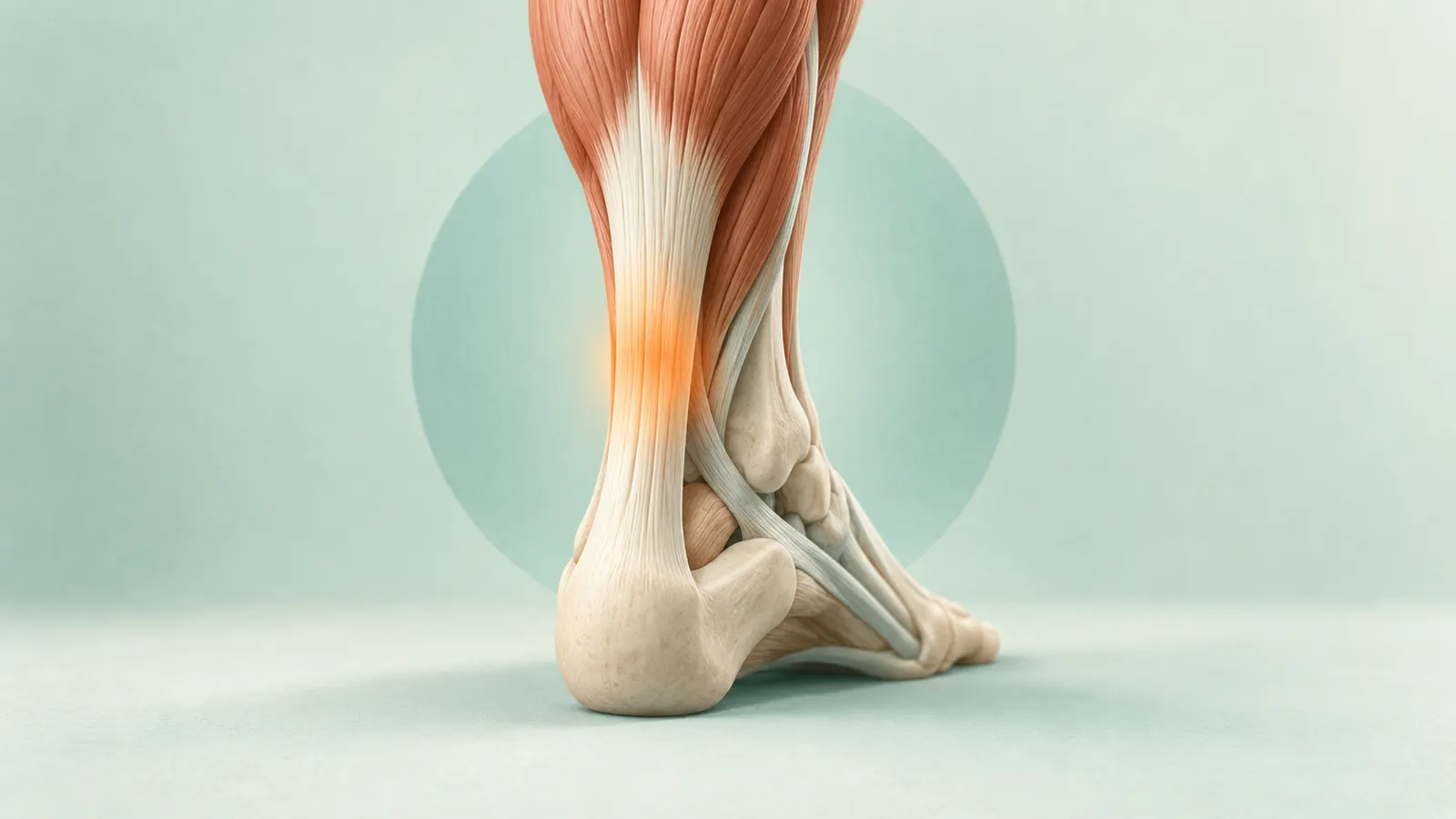
Achilles tendon injury includes sudden or gradual problems in the structure connecting the calf muscles to the heel bone. A feeling of being struck behind the heel, a snapping sound or new walking difficulty during a sudden movement needs prompt assessment. Pain intensity alone does not show the extent of injury.
Summary: Not all pain behind the heel is a tendon rupture, but being able to walk does not rule one out. Sudden injury and gradual tendon symptoms need different assessment. Seek healthcare rather than performing forceful home tests or continuing sport while waiting for pain to settle.
How does sudden injury differ from gradually developing pain?
With sudden injury, a person may recall a specific moment, such as a sound or blow behind the heel while accelerating, jumping or changing direction. Gradual symptoms may involve increasing pain with load and stiffness. These histories guide examination but do not diagnose the problem alone.
The NHS heel pain guide lists sudden sharp heel pain, a sound during injury and walking difficulty as reasons to assess for serious injury. The tendon, surrounding structures and possible bone injury are considered together. Ankle injuries can affect different tissues, so pain is not all treated the same way.
| Information to describe | Example |
|---|---|
| Onset | Suddenly during movement or over several days? |
| Location | Behind the heel, in the sole or in the calf? |
| Change in function | How have walking or push-off strength changed? |
| Previous history | Was there previous pain, injury or treatment? |
Why are walking ability and reduced pain not enough?
Several structures move the foot, so retaining some movement does not establish Achilles tendon integrity. Initial pain may lessen without structural damage resolving. Describing the event provides more information than how much pain remains at that moment.
Do not repeatedly rise onto your toes, try running or squeeze your calf to diagnose yourself online. Examination tests belong within professional assessment. A clinical review of Achilles rupture discusses using history, examination and imaging when needed together.
When is emergency assessment needed?
After injury, inability to bear weight, obvious deformity or severe pain require emergency care. New coldness, paleness, numbness or weakness in the foot also require urgent assessment. A sudden snapping or struck sensation, or new push-off difficulty, needs same-day assessment even if you can walk. Symptoms need not all occur together.
New one-sided leg swelling or calf pain also needs same-day assessment. Call 112 for sudden breathlessness, chest pain or fainting. Do not attribute these symptoms solely to an old sports injury.
What should you do before assessment?
Stop sport, avoid straining the injured side and do not try to loosen it with stretching or massage. Use any support recommended by the team with the technique shown. Do not drive yourself for assessment with a painful leg. Do not stop prescribed medicines or change doses yourself.
Briefly note the injury time, movement and subsequent changes. Bring your medicine list and previous tests if available. This helps complete the assessment rather than demand a particular test or treatment.
How are diagnosis and treatment planned?
Examination assesses tendon continuity and function. Ultrasound or MRI may clarify uncertainty or treatment planning; the same imaging sequence is not mandatory for everyone. Surgery and nonsurgical care for acute rupture are discussed considering the injury, health and ability to participate in rehabilitation.
Once treatment is chosen, understand a workable daily plan. Get written instructions for weight-bearing, removing support, wound or skin care and follow-up. Do not use another person's boot or exercise schedule. General information on muscle strains and tears does not replace an Achilles treatment protocol.
Frequently asked questions
Is there always a sound with an Achilles rupture?
A sound may be reported, but its absence does not exclude injury. Sudden functional change needs assessment.
Can I wait if I can walk?
A sudden snapping sensation or new push-off difficulty warrants same-day assessment. Walking ability does not safely rule out injury.
Is all heel pain caused by the Achilles tendon?
No. The location, onset and examination findings help distinguish causes.
Is pain relief enough to return to sport?
Return is planned using the treatment team's strength and functional assessments, not pain or the calendar alone.
Outcomes of any surgical or interventional procedure may vary from person to person.
This information is for educational purposes and does not replace diagnosis and treatment. Please consult your doctor about your symptoms.