
Cartilage Injury
Cartilage injury is damage to the articular cartilage that covers joint surfaces and allows painless, smooth movement of bones over one another.
Dr. Atakan Güvendiren
Orthopaedics and Traumatology · Istanbul
{ AI · initial information }
onlineLet's discuss your knee
AI answers do not replace a medical diagnosis.
It occurs most frequently in the knee joint; damage to this structure can lead to pain, restricted movement and joint osteoarthritis over time.
Cartilage injury is damage to the cartilage tissue that covers joint surfaces, reduces friction and aids load distribution. It can affect different joints, particularly the knee. Although it may cause pain, swelling or restricted movement, not every injury shows the same symptoms; the course varies from person to person.
Summary: Cartilage injury is tissue damage that can affect joint movement and load-bearing function. Diagnosis is made by evaluating symptoms, clinical examination and imaging when necessary together; MRI may not show every injury. Treatment initially focuses on individually tailored exercise, physiotherapy and load management. Surgery is considered when non-surgical options are insufficient or inappropriate. Recovery and return to sport timeline vary depending on the procedure performed; permanent results cannot be guaranteed.
Is Your Knee Not Moving as Smoothly as Before?
Pain on stairs, swelling after walking or catching in the knee are symptoms that may be seen in cartilage injury. However, these symptoms can also occur with other joint problems. When the complaint started, which movements make it worse and how it affects daily life help guide assessment. Diagnosis is not made based on symptoms alone.
- State whether there was an initial fall or sprain.
- Describe any swelling, catching and movement limitation.
- Share any previous surgery and medications you take in assessment.
What is Cartilage Injury?
Articular cartilage is tissue that covers bone ends and reduces friction between surfaces during movement. Cartilage injury can range from superficial damage to deep injury affecting the underlying bone. The tissue has limited capacity for self-repair. However, finding damage on imaging does not necessarily mean you will have pain or require surgery.
A cartilage defect in a limited area is not the same as osteoarthritis affecting the joint more widely. This distinction is important in treatment planning.
Cartilage Repair and Safe Movement
The goal of cartilage repair is to reduce pain, support joint function and help the person perform daily activities more comfortably. Not every injury is suitable for repair; not every patient needs surgery. Results vary depending on the characteristics of the injury, associated problems and rehabilitation. It cannot be guaranteed that complaints will completely resolve after treatment.
The goal of treatment is to support movement capacity appropriate to the person's needs; it is not a promise of unlimited or painless movement.
Solutions Protecting Knee Function in Cartilage Injury
To protect knee function, muscle strength, ligament status, menisci and leg alignment are evaluated as much as the cartilage surface. Activity modification, individually tailored exercise and medication treatment when needed are initial options. Surgery decisions are made after discussing expected benefits and risks when appropriate options are insufficient or not suitable.
- Daily life and sport goals are set.
- Load on the joint is assessed.
- Associated ligament or meniscus problems are considered.
- Response to treatment is reviewed at follow-up visits.
What are the Symptoms of Cartilage Injury?
Cartilage injury may present with pain during movement, swelling in the joint, catching or reduced range of motion. The severity of symptoms does not always match the size of the injury. Some injuries may cause no symptoms; some complaints may be intermittent. Worsening of symptoms is not inevitable, and other joint problems are also considered in assessment.
Pain, Swelling and Movement Limitation
- Pain during or after movement
- Complaints that worsen with activity
- Swelling or fullness in the joint
- Limitation in bending and straightening
Persistent pain after sport may require assessment; the cause may not be cartilage injury alone.
Catching, Locking and Sensation of Loose Body
Loose fragments inside the joint can cause mechanical symptoms:
- Catching or locking
- Sensation of giving way during movement
- Feeling that something is moving inside the joint
These symptoms are evaluated on examination; they do not directly indicate the need for surgery.
Load-Bearing Difficulty and Progressive Complaints
Standing for long periods, using stairs or walking may become difficult. In some patients, functional loss may increase; in others, symptoms may remain stable. It cannot be said that the injury will necessarily progress or that treatment options will definitely decrease.
Does Cartilage Injury Always Cause Symptoms?
No. Particularly superficial injuries may not cause noticeable complaints. Imaging findings are interpreted together with the person's symptoms and examination.
When Should You See a Doctor?
- Persistent or recurring joint pain
- Recurring swelling after activity
- Catching or locking
- Movement loss limiting daily life
The following referral table applies for emergency symptoms.
How Do Cartilage Injuries Occur?
Impact, sprain, repetitive loading or changes in joint mechanics can affect cartilage. The tissue's limited repair capacity does not mean every injury will progress.
What are the Most Common Causes of Cartilage Injuries?
Cartilage injuries can be associated with trauma, repetitive overloading, joint imbalance or age-related changes. A person may have multiple contributing factors. Understanding the cause of injury is important for planning treatment and managing load. Not every sports activity, excess weight or previous surgery necessarily causes cartilage injury.
Traumatic Injuries
- Sudden twisting, falling or impact
- Forceful landing after jumping
- Damage accompanying ligament or meniscus injury
Repetitive Microtrauma (Overuse)
- Training beyond capacity
- Repetitive forceful movements
- Incorrect sports technique
Impact varies depending on the level of load and joint condition.
Joint Imbalance and Mechanical Dysfunction
- Malalignment of the leg
- Ligament insufficiency
- Loss of meniscal tissue
These can change how load is distributed across the joint surface.
Age-Related Degeneration (Degenerative Process)
With age, cartilage structure and mechanical properties can change. Osteoarthritis development varies from person to person; age alone does not determine treatment.
Obesity and Excess Weight
Excess weight can increase the mechanical load on weight-bearing joints. This relationship cannot be explained by a fixed coefficient for every person and activity.
Previous Joint Surgery
Meniscectomy or ongoing ligament problems can affect joint loading. Previous procedure and rehabilitation are evaluated together with current complaints.
What are the Treatment Options for Cartilage Injuries?
Treatment is planned according to the location, depth and extent of the damage and the individual's daily requirements. Appropriate non-surgical options are evaluated first; not everyone needs to try all methods. Surgery is the next step in selected situations. The goal is to reduce pain and support function; regeneration of cartilage or certain prevention of osteoarthritis in the future cannot be promised.
Non-operative (Conservative) Treatment Methods
The non-operative approach aims to manage symptoms and joint loading. Benefit does not demonstrate that the damaged tissue has returned to its original structure.
Rest and Activity Modification
- Movements that increase pain are adjusted with medical advice.
- Strenuous sports activities are limited if necessary.
- Daily movement plan is adapted to the patient's capacity.
Physiotherapy and Rehabilitation
- Muscle strengthening
- Maintenance of range of motion
- Balance and proprioception exercises
Exercises are performed as instructed by the physiotherapist or doctor.
Medication Treatment
The selection of medication for pain and inflammation is evaluated together with any accompanying conditions and other medicines. The duration of use is determined by the doctor. Do not stop your medication or change the dose on your own.
Intra-Articular Injections
The aims and evidence levels of injections are not the same:
- Corticosteroid: May be considered for short-term symptom control in selected cases.
- Hyaluronic acid: Guideline support is limited; it is not presented as cartilage repair.
- PRP: Its effect varies depending on the application and the patient's condition; it cannot be guaranteed to regenerate cartilage or improve surgical outcomes.
- Stem cell applications: Evidence of efficacy is limited; they cannot be described as an established cartilage regeneration treatment.
Surgical Treatment Methods
Surgical choice should not be based solely on age or MRI findings. Infection, bleeding, joint stiffness, deep vein thrombosis, embolism, ongoing pain, and the possibility of revision surgery must be considered. Graft failure or inadequate repair is possible. If fixation material was used, problems such as loosening may develop.
Arthroscopic Cartilage Debridement
In selected mechanical problems, unstable or loose fragments can be cleaned away. This does not create new cartilage; it is not a routine solution for every early defect or widespread osteoarthritis.
Microfracture Technique
Small openings are created in the bone beneath the cartilage to promote repair tissue development. The tissue formed is not of the same structure as natural joint cartilage. Suitability is determined by the characteristics of the defect.
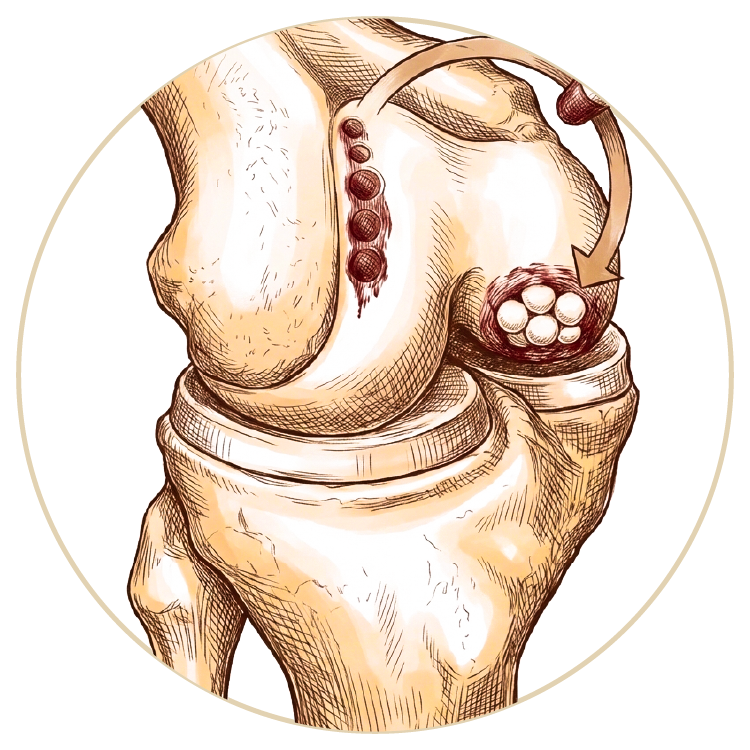
Cartilage Transfer (Osteochondral Grafting)
Cartilage and underlying bone are transferred together. In autograft, tissue is taken from the patient's own body; the amount available is limited. For larger defects, donor-derived allograft is an alternative option to be evaluated.
Cellular Cartilage Repair
In autologous chondrocyte implantation, cartilage cells taken from the patient are cultured in the laboratory and applied to the damaged area. This is not the same procedure as stem cell injection; suitability requires careful evaluation.
| Approach | Basic aim | Important boundary |
|---|---|---|
| Physiotherapy and load management | Managing symptoms and function | Does not guarantee structural regeneration |
| Injections | Symptom control in selected cases | Methods have different evidence levels |
| Debridement | Reducing mechanical symptoms | Does not create cartilage |
| Microfracture | Stimulating repair tissue development | Not equivalent to natural cartilage |
| Osteochondral grafting | Replacing the damaged area with tissue | Autograft quantity is limited |
| Cellular repair | Supporting repair in selected defects | Not suitable for every patient |
Which Treatment Method is More Suitable?
Examination and imaging are evaluated together. MRI helps understand the characteristics of the damage; it may miss superficial lesions. A normal MRI result does not definitively exclude cartilage damage.
What is the Recovery Process After Cartilage Injury Surgery?
Recovery varies depending on the type of procedure performed, the characteristics of the damage, and any accompanying operations. There is no one-size-fits-all timeline for walking, weight-bearing, and return to sport. Progress is determined by assessing examination findings, pain, swelling, range of motion, and muscle control. Rehabilitation is tailored to the individual by the physiotherapist in accordance with the surgeon's restrictions.
First Days After Surgery
Pain and swelling are monitored, and the repair is protected. Weight-bearing limits are set by the surgeon. Crutches or other supports are used as instructed by the physiotherapist; a walker is not used on standard stairs.
Early Rehabilitation Phase
Permitted movements and muscle exercises are performed. The scope of exercises is adjusted based on the procedure's characteristics; changes in swelling or loss of motion are reported to the team.
Functional Recovery Phase
Muscle strength, balance, and daily movements are improved. Reduction of support use is based not only on comfort but on doctor and physiotherapist assessment.
Late-stage Rehabilitation and Return to Sport
Running, jumping, and direction changes are added to the programme after necessary clinical assessment. Simply reaching a certain timeframe is not sufficient for clearance to return to sport.
Factors Affecting the Recovery Process
- Type of surgical procedure performed
- Location and extent of the damage
- Accompanying ligament or meniscus problems
- Muscle strength and compliance with rehabilitation
What Should Be Observed After Surgery?
Follow-up appointments must be maintained, and instructions on loading and medication must be followed. For each alert level below, any one or more of the following symptoms is sufficient; all do not need to be present simultaneously.
| Presentation level | Symptoms |
|---|---|
| Immediately call 112/emergency services | Sudden shortness of breath; chest pain; fainting; coughing up blood; rapid palpitations |
| Immediately call 112/emergency services | Severe pain out of proportion to the injury, persistent or rapidly increasing in severity; pain that increases noticeably with passive movement; tense swelling; new numbness or weakness |
| Immediately call 112/emergency services | Limb coldness, paleness, or discolouration; new muscle weakness; new confusion or incoherent speech with or without fever |
| Immediately call 112/emergency services | Severe pain; deformity; inability to move; inability to bear weight; uncontrollable bleeding |
| Medical evaluation the same day | One-sided leg swelling, calf pain, or tightness |
| Medical evaluation the same day | Increasing wound redness, warmth, swelling, or discharge; wound edges opening. Fever is not required. |
| Medical evaluation the same day | Fever 38°C or higher or persistent fever; chills; general deterioration. The lower threshold in discharge instructions applies. |
Frequently asked questions
Answers regarding diagnosis, treatment, and recovery from cartilage injuries vary according to the patient's clinical findings. The following information is for general education. MRI result, age, or time elapsed alone is not sufficient to make decisions. Particularly regarding movement and weight-bearing after surgery, the individualised discharge plan must be followed.
Is Permanent Recovery Possible After Cartilage Surgery?
After surgery, prolonged improvement in pain and movement capacity may be seen. However, permanence of results cannot be guaranteed. The characteristics of the damage, the overall condition of the joint, and rehabilitation outcomes are influential. Reduction of symptoms does not mean the tissue has completely returned to its original state; follow-up care and appropriately managed loading remain important.
Does Cartilage Injury Heal on Its Own?
Cartilage has limited capacity to renew itself; it is not expected that a damaged surface will spontaneously return to its original structure. Despite this, pain and swelling may decrease, and minor damage may not cause symptoms. Symptom improvement is not the same as structural healing. It is not inevitable that all damage will progress or require surgery.
Is cartilage injury pain always continuous?
Pain does not have to be continuous; it may become more pronounced with movement or follow a fluctuating course. The frequency and severity of symptoms vary from person to person. Persistent pain, recurrent swelling, or restricted movement should be evaluated. If sudden severe pain or inability to bear weight develops, routine follow-up should not be relied upon; the emergency warning signs mentioned above should be observed.
Does cartilage injury always show up on MRI?
No, MRI does not definitively show every cartilage injury. It helps assess the location, depth, and associated problems of damage; particularly superficial injuries may be missed. A normal result does not definitively exclude cartilage damage. The physician interprets the images together with symptoms and physical examination findings, and plans further evaluation accordingly.
Does cartilage injury always require surgery?
Not every cartilage injury requires surgery. The decision takes into account the characteristics of the damage, the impact on daily activities, and any associated joint problems. Surgical options may be considered when appropriate non-operative approaches prove insufficient or are not suitable for that person. Not every patient must try all injections or all conservative methods.
Is non-operative treatment effective for cartilage injuries?
In suitable patients, physiotherapy, exercise, and activity modification can help reduce pain and ease movement. Response varies from person to person; these methods do not mean that the damaged cartilage is completely regenerated. Injections are not equivalent. Options are evaluated taking into account symptoms and any accompanying conditions; response is reassessed at follow-up visits.
Can repaired cartilage be damaged again after surgery?
Re-injury of the repaired area or recurrence of symptoms is possible. The risk depends on various factors ranging from the procedure performed to how the joint is loaded. Compliance with rehabilitation is important but not the sole determining factor. To avoid early or excessive loading, movement limits should be set according to the surgeon's and physiotherapist's recommendations and should not be increased at the person's own discretion.
How long after cartilage surgery can you walk?
Starting to walk and bearing full weight are not the same. Different restrictions may be needed after debridement, microfracture, and cartilage transplantation. The surgeon determines the use of support and permitted weight-bearing based on the procedure performed. Progress is not determined solely by time elapsed; assistive devices should be used as demonstrated by the physiotherapist.
Does cartilage injury prevent playing sports?
Cartilage injury does not require stopping all sports; appropriate activity varies depending on the damage and symptoms. Movements that increase pain or swelling should be evaluated. Return to sport after surgery is planned taking into account the type of procedure, muscle control, and joint function. Return to the previous level of sport cannot be guaranteed for every patient.
Does cartilage injury lead to osteoarthritis?
Cartilage damage can contribute to the development of osteoarthritis, but not every injury necessarily leads to osteoarthritis. The extent of the damage, joint mechanics, and associated problems are important. Treatment aims to manage symptoms and function; it cannot be said that it will definitively prevent osteoarthritis in future. The need for follow-up is determined by the patient's symptoms and evaluation findings.
Are stem cells effective in cartilage treatment?
Evidence for the effectiveness of stem cell applications in cartilage injuries is limited. It cannot be definitively stated that they regenerate cartilage or improve surgical outcomes. PRP is a different treatment; it should not be presented as equivalent under the same heading. When considering treatment, uncertainties should be explained and these methods should not be assumed to replace established options.
Does cartilage injury occur at any age?
Cartilage injury can occur at different ages. In younger people, sport or trauma may be prominent considerations; in older people, degenerative changes may be more relevant. However, this distinction is not absolute. Treatment is not chosen based on age alone. The characteristics of the damage, the overall state of the joint, the person's activity level, and expectations are considered together to determine the appropriate approach.
Does cartilage surgery provide a permanent solution?
Cartilage surgery can provide long-term symptom reduction and improved function in some patients; it does not guarantee a permanent solution. Repair may prove insufficient, symptoms may persist, or reoperation may be needed. Before deciding, expected benefits, surgical risks, and rehabilitation requirements are evaluated. Outcomes vary depending on the patient and the method used.
What happens if cartilage injury is left too long?
Some cartilage damage may expand over time or affect daily activities more significantly; this course does not occur in everyone. It cannot be said that delay will necessarily reduce options or require joint replacement. Persistent pain, swelling, or locking should be evaluated. The goal is appropriate planning for the current situation, not hurried decisions based on fear.
This information is for educational purposes and does not replace diagnosis and treatment. Please consult your doctor about your symptoms.
Frequently Asked Questions
Does cartilage injury heal on its own?
Cartilage has limited capacity to renew itself; it is not expected that a damaged surface will spontaneously return to its original structure. Despite this, pain and swelling may decrease, and minor damage may not cause symptoms. Symptom improvement is not the same as structural healing. It is not inevitable that all damage will progress or require surgery.
Is cartilage injury pain always continuous?
Pain does not have to be continuous; it may become more pronounced with movement or follow a fluctuating course. The frequency and severity of symptoms vary from person to person. Persistent pain, recurrent swelling, or restricted movement should be evaluated. If sudden severe pain or inability to bear weight develops, routine follow-up should not be relied upon; the emergency warning signs mentioned above should be observed.
Does cartilage injury always show up on MRI?
No, MRI does not definitively show every cartilage injury. It helps assess the location, depth, and associated problems of damage; particularly superficial injuries may be missed. A normal result does not definitively exclude cartilage damage. The physician interprets the images together with symptoms and physical examination findings, and plans further evaluation accordingly.
Does cartilage injury always require surgery?
Not every cartilage injury requires surgery. The decision takes into account the characteristics of the damage, the impact on daily activities, and any associated joint problems. Surgical options may be considered when appropriate non-operative approaches prove insufficient or are not suitable for that person. Not every patient must try all injections or all conservative methods.
Is non-operative treatment effective for cartilage injuries?
In suitable patients, physiotherapy, exercise, and activity modification can help reduce pain and ease movement. Response varies from person to person; these methods do not mean that the damaged cartilage is completely regenerated. Injections are not equivalent. Options are evaluated taking into account symptoms and any accompanying conditions; response is reassessed at follow-up visits.
Can repaired cartilage be damaged again after surgery?
Re-injury of the repaired area or recurrence of symptoms is possible. The risk depends on various factors ranging from the procedure performed to how the joint is loaded. Compliance with rehabilitation is important but not the sole determining factor. To avoid early or excessive loading, movement limits should be set according to the surgeon's and physiotherapist's recommendations and should not be increased at the person's own discretion.
How long after cartilage surgery can you walk?
Starting to walk and bearing full weight are not the same. Different restrictions may be needed after debridement, microfracture, and cartilage transplantation. The surgeon determines the use of support and permitted weight-bearing based on the procedure performed. Progress is not determined solely by time elapsed; assistive devices should be used as demonstrated by the physiotherapist.
Does cartilage injury lead to osteoarthritis?
Cartilage damage can contribute to the development of osteoarthritis, but not every injury necessarily leads to osteoarthritis. The extent of the damage, joint mechanics, and associated problems are important. Treatment aims to manage symptoms and function; it cannot be said that it will definitively prevent osteoarthritis in future. The need for follow-up is determined by the patient's symptoms and evaluation findings.
Are stem cells effective in cartilage treatment?
Evidence for the effectiveness of stem cell applications in cartilage injuries is limited. It cannot be definitively stated that they regenerate cartilage or improve surgical outcomes. PRP is a different treatment; it should not be presented as equivalent under the same heading. When considering treatment, uncertainties should be explained and these methods should not be assumed to replace established options.
Does cartilage injury occur at any age?
Cartilage injury can occur at different ages. In younger people, sport or trauma may be prominent considerations; in older people, degenerative changes may be more relevant. However, this distinction is not absolute. Treatment is not chosen based on age alone. The characteristics of the damage, the overall state of the joint, the person's activity level, and expectations are considered together to determine the appropriate approach.
Does cartilage surgery provide a permanent solution?
Cartilage surgery can provide long-term symptom reduction and improved function in some patients; it does not guarantee a permanent solution. Repair may prove insufficient, symptoms may persist, or reoperation may be needed. Before deciding, expected benefits, surgical risks, and rehabilitation requirements are evaluated. Outcomes vary depending on the patient and the method used.
What happens if cartilage injury is left too long?
Some cartilage damage may expand over time or affect daily life more significantly; this progression does not occur in everyone. Delay does not necessarily reduce options or necessitate a prosthesis. Persistent pain, swelling or locking should be evaluated. The aim is not a fear-based rushed decision, but planning appropriate to the current condition. *This text is for information purposes only; it does not replace diagnosis and treatment. Please consult your doctor for your symptoms.*





Schedule an Appointment
Your information will be sent to Dr. Atakan Güvendiren's clinic. A response will be provided within 24 hours.