
New Pain in a Replaced Knee: When Is Assessment Needed?
11 October 2026, 7 min
Editor: DijitalPi Content Team, Updated: 11 October 2026
In this article 08
- 01How does new pain differ from early recovery pain?
- 02Which symptoms require prompt attention?
- 03Which possibilities are assessed at examination?
- 04Can infection occur without fever?
- 05What do X-rays and blood tests investigate?
- 06How should movement and exercise be handled before follow-up?
- 07Does every new pain mean another operation?
- 08Frequently asked questions
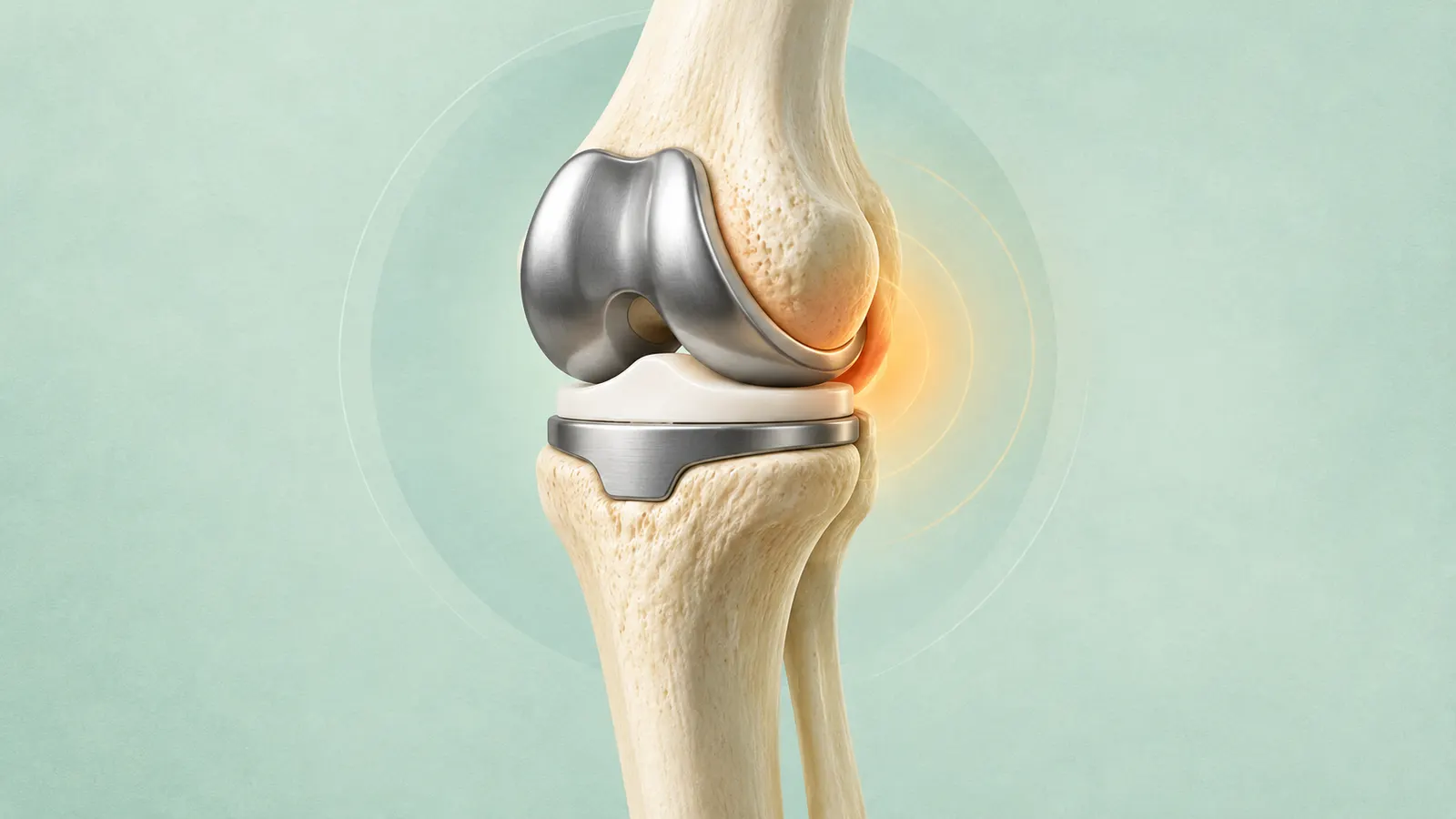
New pain in a replaced knee after initial symptoms improved or disappeared needs its cause assessed. Contact the team if pain begins after comfortable walking, swelling develops or movement becomes difficult. New pain does not necessarily mean the implant must be replaced.
Summary: This article concerns symptoms after a comfortable period rather than expected pain in the first days. Onset and daily impact guide assessment. Examination distinguishes infection, mechanical implant problems and other causes. No fever does not exclude infection. Do not wait for routine follow-up with sudden severe pain, inability to bear weight or breathlessness.
How does new pain differ from early recovery pain?
Postoperative pain varies; the focus here is a new change from your previous condition. Mention movements that were comfortable months ago but are now difficult, or new resting pain. A single day count cannot classify pain as normal.
See recovery after knee replacement for the early postoperative period. For new symptoms, compare with your own earlier function: 'Stairs used to be painless; now every descent hurts' is more informative than 'my knee hurts'.
For follow-up, note:
- Whether there was a comfortable period before the pain.
- Whether symptoms began suddenly or gradually.
- Whether pain is at the front, back or a particular side of the knee.
- Whether it occurs walking, standing up or resting.
- New swelling, redness, discharge or instability.
Do not delay care to complete these notes.
Which symptoms require prompt attention?
Urgency depends on associated symptoms. Any one of the following warrants care; do not wait for all of them. Increasing pain in a previously comfortable knee, wound changes or new leg swelling should be reported the same day. Do not wait for fever.
| Presentation level | Example situations | Action |
|---|---|---|
| Emergency | Sudden breathlessness, chest pain or fainting | Call 112; do not drive yourself. |
| Emergency | Sudden severe pain, inability to bear weight, deformity; new foot coldness or marked weakness | Seek emergency care; call 112 for safe transport if needed. |
| Same day | New or increasing knee pain; redness, marked warmth, discharge; new one-sided leg swelling or calf pain | Contact your team the same day; if unreachable, attend a healthcare facility. |
| Same day | Fever, chills or worsening general condition | Do not wait for the scheduled check. Seek emergency help for new confusion. |
This is not a diagnostic list. One-sided swelling may need clot assessment; wound changes may need infection assessment. The NHS complications guide includes these as reasons for early care.
Which possibilities are assessed at examination?
Examination aims to find the pain source and choose treatment. Implant fixation, joint balance, surrounding bone and soft tissues are assessed, including possible infection. Movement-related or localized pain informs the doctor but cannot establish the cause at home.
Loosening, wear, instability or fracture may occur around an implant; treatments differ. The AAOS revision knee replacement guide explains using symptoms, examination and investigations together.
Do not conclude that pain means the implant has reached its lifespan. Implant lifespan and follow-up explains why years and clinical condition differ. Age alone cannot decide the issue before the new symptom's cause is established.
Can infection occur without fever?
Implant infection can occur without fever. Pain in a previously comfortable joint, swelling, warmth or wound discharge warrants assessment, even if not all are present. A normal temperature must not delay investigation. Report symptom onset and changes.
The AAOS joint replacement infection guide notes that infection can occur long after surgery and that blood tests and joint fluid analysis may aid diagnosis. The doctor decides which tests are needed.
Discuss assessment with the team instead of starting leftover antibiotics, changing prescriptions or waiting for improvement. Report medicines and recent infections at examination.
What do X-rays and blood tests investigate?
Investigations answer examination questions. X-rays assess the implant and surrounding bone. Suspected infection may need blood tests or joint fluid sampling. Not everyone needs the same tests; comparison with older images can help.
Bring the operation report, implant documents, previous images and medicine list if available. Missing documents must not delay emergency care. Ask which possibility a test investigates and what the next step will be after the result.
Do not diagnose infection or loosening from one test result online. Results are considered alongside symptoms and examination.
How should movement and exercise be handled before follow-up?
New pain may require review of exercises. Do not continue movements that increase it; discuss activity and support with your team. Follow existing weight-bearing limits. With emergency signs, seek care instead of adjusting exercise. Do not change medicine doses yourself.
Describe concrete changes in walking at home, rising from a chair, sleep or commuting. Alongside 'Should I exercise more?', ask 'Which movement should I change for now?'.
The plan may include activity adjustment, rehabilitation and follow-up as well as medicines or surgery. The knee replacement page explains the general treatment framework.
Does every new pain mean another operation?
Pain alone does not determine reoperation. The identified problem, functional loss, health and options are considered together. Explain what surgery aims to correct if needed. Without identifying the cause, replacing the implant should not be expected to remove all pain.
If revision is considered, discuss benefits alongside infection, bleeding, clots, fracture, restricted movement and persistent pain. Outcomes vary. Prepare these questions:
- What explains the pain?
- Are nonsurgical options suitable for me?
- Which symptom does the proposed procedure aim to improve?
- Which changes during follow-up should prompt reassessment?
Frequently asked questions
Is pain beginning years later considered normal?
Time alone does not make new pain normal. Assess the implant and surrounding tissues. Report onset, movement relationship and associated signs. Contact the team the same day for new or increasing pain; emergency signs must not wait for routine appointments.
Should I cancel the check if pain improves?
Tell the team and decide together whether the planned check is still needed. Describe recurrent symptoms, intermittent swelling or instability. Do not change the plan yourself just because you feel better that day.
Does a knee noise mean the implant is damaged?
The team may ask when the noise started and about pain or movement changes. Sound alone cannot diagnose implant condition. Report new pain, swelling or giving way with noise; do not repeatedly test painful movements.
Outcomes of any surgical or interventional procedure may vary from person to person.
This information is for educational purposes and does not replace diagnosis and treatment. Please consult your doctor about your symptoms.