
Ankle Arthroscopy
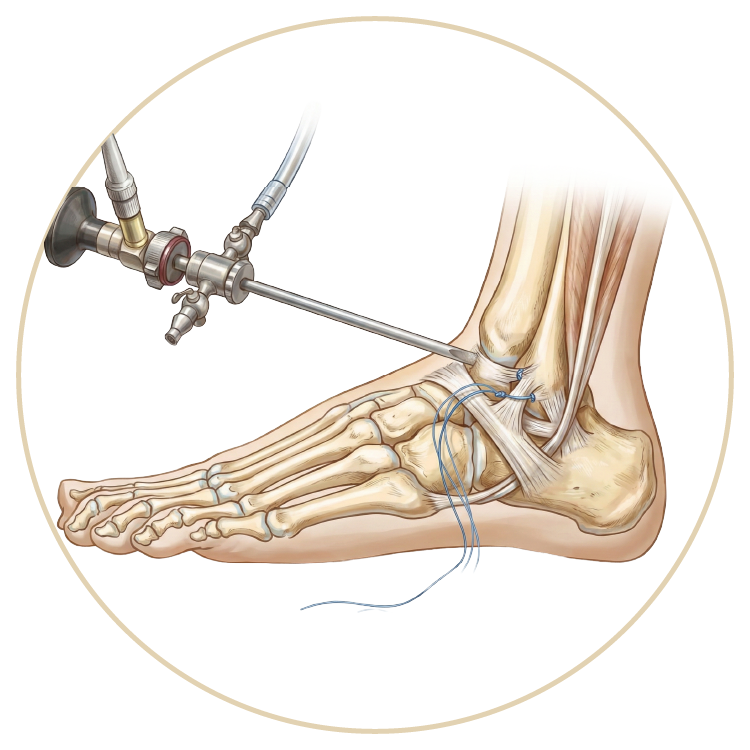
Ankle arthroscopy is a modern, minimally invasive surgical technique in which problems developing in the ankle joint are both diagnosed and treated using a camera and specialised surgical instruments inserted through small incisions. This method causes less tissue damage and shorter recovery time compared with conventional open surgery

Dr. Atakan Güvendiren
Orthopaedics and Traumatology · Istanbul
{ AI · initial information }
onlineLet's discuss closed surgery
AI answers do not replace a medical diagnosis.
Ankle arthroscopy is a modern, minimally invasive surgical technique in which problems developing in the ankle joint are both diagnosed and treated using a camera and specialised surgical instruments inserted through small incisions.
Ankle arthroscopy is a surgical technique in which the ankle joint is evaluated with a camera and surgical instruments inserted through small incisions, and intra-articular problems are treated when appropriate. The scope of the procedure is determined by the cause of the complaint, physical examination findings and imaging results. Not every ankle pain requires arthroscopy.
Summary: Ankle arthroscopy is a closed surgical technique used in evaluating and treating selected intra-articular problems. It may be considered for cartilage damage, impingement or loose bodies. Elective surgery is evaluated when non-surgical options suitable for you prove inadequate or are not appropriate. The use of small incisions does not mean there will be no complications or that healing will occur quickly. Weight-bearing, return to daily activities and sport planning are personalised according to the planned procedure.
Is Your Ankle Pain Limiting Your Daily Life?
Pain when walking, swelling inside your shoe or a catching sensation during movement may require ankle assessment. These symptoms can originate from cartilage, ligaments, tendons or other structures around the joint. The decision for arthroscopy is not based on the presence of pain alone; the impact of symptoms on daily life, physical examination and imaging findings are considered together. The source of pain must first be understood.
In evaluation, the location of pain, its onset, previous sprains and treatments already given are important. The intra-articular structures that can be reached during arthroscopy include:
- Cartilage surfaces: The location and characteristics of damage can be examined.
- Synovial tissue: Thickening or inflammatory changes in the joint lining can be evaluated.
- Loose bodies: Bone or cartilage fragments can be identified.
- Ligament structures visible from within the joint: Can be examined according to the planned procedure.
Not all tendons outside the joint are visualised with this method. When the source of pain is outside the joint, different evaluation or treatment may be needed.
Effective Solution for Ankle Pain
Effective treatment of ankle pain depends on identifying the option suitable for the cause of the pain. Activity modification, exercise, physiotherapy and appropriate medication can be evaluated before surgery. Arthroscopy comes into consideration when these options suitable for you prove insufficient or cannot be applied. The goal is to reduce pain and improve function; the outcome varies depending on the characteristics of the condition and requires individual evaluation.
Non-surgical approach does not simply mean waiting. Treatment planning may include:
- Management of loads that increase pain.
- Movement, strength and balance exercises as shown by the physiotherapist.
- Medication or support applications as appropriate according to the doctor's assessment.
- Injection options evaluated according to the diagnosis.
Injections are not equivalent. Corticosteroids may be considered in selected situations for short-term relief; guideline support for hyaluronic acid is limited. Not every patient needs to try all options. Do not stop your medications or change doses on your own.
Ankle Joint Problems Can Be Controlled with Arthroscopy
Arthroscopy may be part of treatment in selected patients where pain originates from a specific intra-articular problem. Removal of trapped tissues or loose fragments, or intervention in some cartilage lesions may be intended. However, the procedure does not eliminate all joint disease. It is possible for symptoms to persist, recur or require other treatments; the expected benefit is evaluated with personal findings.
When making a decision, these questions are clarified:
- Is the source of the complaint in an area that can be reached with arthroscopy?
- Are imaging findings consistent with the patient's complaints?
- Have non-surgical treatments suitable for you been adequate?
- Can necessary load restriction and rehabilitation be applied after the procedure?
In widespread advanced joint wear, the benefit that arthroscopy can provide may be limited. Early surgery does not necessarily prevent degeneration or prevent future injuries. Expectations should include both what can be done and the limitations of the procedure.
Differences Between Anterior and Posterior Ankle Arthroscopy
The fundamental difference between anterior and posterior approaches lies in the location of surgical access and the anatomical region to be reached. The anterior approach can be planned for problems in the anterior part of the ankle, while the posterior approach is suited to selected problems in the posterior region. Which approach will be used depends on the location of the lesion; neither is universally more suitable or faster-healing than the other for all patients.
| Comparison | Anterior ankle approach | Posterior ankle approach |
|---|---|---|
| Target region | Anterior part of the ankle joint | Posterior part of the ankle; other structures in the hindfoot according to plan |
| Conditions that can be evaluated | Anterior impingement, accessible cartilage lesions, loose bodies | Posterior impingement, accessible intra-articular lesions |
| Procedure selection | Based on the location and extent of the problem | Based on the location of the problem and target anatomical structure |
| Recovery plan | Determined according to the intervention performed | Determined according to the intervention performed |
In anterior ankle arthroscopy, bone or soft tissue impingement in the anterior part of the joint can be evaluated.
In the posterior ankle approach, it must be clearly defined whether the target is the ankle joint, the subtalar joint, or an extra-articular structure. The Achilles tendon is extra-articular. Endoscopic procedures around this tendon are not the same as joint arthroscopy. The choice of approach alone does not determine the recovery period.
In Which Conditions Is Ankle Arthroscopy Performed?
Ankle arthroscopy can be considered for selected cartilage lesions, impingement, loose joint bodies, and certain synovial problems. In patients with ligament insufficiency, it can be performed alongside other surgical procedures. In planned operations, conservative options tailored to the individual are evaluated. However, if there is suspicion of intra-articular infection, this approach differs; urgent evaluation and a different treatment plan may be required.
The main evaluation areas are:
- Cartilage damage or osteochondral defect.
- Anterior or posterior impingement syndrome.
- Loose fragments that may cause catching.
- Disease-related changes in synovial tissue.
- Intra-articular problems accompanying ligament insufficiency.
Talar Cartilage Disease and Osteochondral Defects: Arthroscopic Treatment
The talus is one of the bones that makes up the ankle joint. An osteochondral lesion refers to damage involving both the cartilage and the underlying bone. Treatment varies according to the characteristics of the lesion.
- Unstable or damaged tissue can be cleaned.
- In suitable lesions, methods such as microfracture can be considered.
- The weight-bearing and exercise plan is adjusted according to the intervention performed.
These procedures do not mean that the cartilage will definitely return to its previous structure. It also cannot be guaranteed that early arthroscopy will prevent future joint wear.
Ankle Impingement Syndrome and the Importance of Arthroscopy
In impingement syndrome, bone or soft tissues can cause pain and restricted motion during movement. It can occur in the anterior or posterior region.
In suitable patients, bone protrusions or thickened tissues contributing to impingement can be addressed. The aim is to reduce symptoms. If there is accompanying cartilage damage or ligament problems, removal of the impinging tissue alone may not resolve all complaints.
Tendon and Ligament Injuries: Achilles Tendon and Surrounding Problems
Ligaments contribute to joint stability, while tendons transmit muscle force into movement. These structures are not the same; their treatments vary according to the injured area.
- In ligament insufficiency, arthroscopy can help evaluate accompanying intra-articular problems.
- An additional or different surgical procedure may be required for ligament repair.
- Endoscopy or procedures around the Achilles tendon are planned separately from joint arthroscopy.
Rehabilitation aims to support function; it does not eliminate the risk of re-injury.
Subtalar Joint and Hindfoot Pathology: Arthroscopic Intervention
The subtalar joint lies between the talus and the calcaneus and contributes to the foot's movements that allow adaptation to the ground. It is a separate joint from the ankle joint.
In selected conditions, loose bodies, cartilage problems, or synovial changes in this joint can be evaluated arthroscopically. The joint that is addressed and the procedure performed determine the post-operative movement and weight-bearing plan.
Loose Joint Bodies and Arthroscopic Removal
Loose bone or cartilage fragments within the joint can cause pain, catching, or restricted motion. When they are assessed as related to symptoms, arthroscopic removal can be considered.
Removal of the fragments can reduce mechanical complaints. However, if there is accompanying cartilage damage or other joint disease, pain may persist. The procedure does not guarantee that new problems will not develop in the future.
How Is Ankle Arthroscopy Performed?
In ankle arthroscopy, under appropriate anaesthesia, a camera and instruments are advanced through small surgical incisions. The surgeon examines the inside of the joint and performs necessary interventions within the scope of the previously discussed treatment plan. The duration and extent of the procedure vary from person to person. The use of small incisions does not mean that the intervention inside the joint is minor or requires no follow-up.
The surgical process consists of the following stages:
- Preparation: General health, medications used, and the planned intervention are evaluated.
- Anaesthesia: The appropriate method is determined by the anaesthesia team.
- Visualisation: Structures inside the joint are examined through the surgical incisions.
- Intervention: Depending on the plan, loose body removal, tissue cleaning, or cartilage procedures may be applied.
- Follow-up plan: Wound care, use of support, weight-bearing, and review conditions are explained.
If ligament repair or extra-articular tendon procedure is needed, the scope is evaluated separately. The decision to discharge is made based on the intervention performed, recovery from anaesthesia, and the ability to move safely.
Ankle Arthroscopy Recovery Process and Physiotherapy
Recovery depends not only on the size of the incision but on the procedure performed inside the joint. Loose body removal does not require the same rehabilitation plan as cartilage intervention or ligament repair. When and how much weight can be borne is determined by the surgeon. Return to daily activities and sports is based on tissue healing and functional assessment rather than the calendar.
Maintenance and movement recommendations should be applied according to your individual discharge plan:
- Walking support: Use a crutch or appropriate assistive device as demonstrated by the physiotherapist.
- Stairs: A walking frame is not used on standard stairs; the safe method should be demonstrated by the physiotherapist.
- Swelling management: Apply cold therapy and leg elevation as prescribed by the team.
- Exercise: Begin movement, strength and balance work under the scope determined by the physiotherapist.
- Wound care: Continue dressing and wound protection according to your discharge instructions.
Driving clearance is assessed by your doctor based on full vehicle control, ability to perform emergency braking, and not being under the influence of medications that cause drowsiness or dizziness. Do not stop your medications on your own to drive.
Return to sport is assessed based on pain, swelling, range of motion, strength and balance. There is no standard fixed return timeframe for everyone.
What are the risks of ankle arthroscopy and alarm symptoms?
Ankle arthroscopy may result in complications such as infection, bleeding, blood vessel or nerve injury, deep vein thrombosis and persistent pain. Loss of movement, return of symptoms or need for further surgery are possible. Risks are assessed according to the procedure performed and the individual's health status. Before discharge, it should be clearly explained which symptoms are not expected after surgery.
Arthroscopy alone is not prosthesis insertion. Therefore, prosthesis loosening is not listed as a routine arthroscopy risk; if additional procedures are planned, their specific risks will be explained separately.
One or more of the following symptoms is sufficient for seeking care; not all need to be present.
| When to seek care | Symptoms |
|---|---|
| Immediately 112 or emergency department | Sudden shortness of breath, chest pain, fainting, coughing up blood, or rapid heartbeat |
| Immediately 112 or emergency department | Severe pain disproportionate to the injury, persistent or rapidly increasing; pain that significantly worsens with passive movement; tight swelling, numbness or weakness |
| Immediately 112 or emergency department | Coldness, paleness, discolouration, new numbness or loss of strength in the limb |
| Immediately 112 or emergency department | New confusion or incoherent speech; fever is not required |
| Immediately 112 or emergency department | New severe pain, deformity, inability to move or bear weight, or uncontrollable bleeding |
| Medical evaluation the same day | Swelling of one leg only, calf pain or calf tightness |
| Medical evaluation the same day | Increasing redness, warmth, swelling, discharge or opening of wound edges at the wound site; fever is not required |
| Medical evaluation the same day | Temperature of 38°C or above or persistent fever, chills or general deterioration; a lower threshold in your discharge instructions takes precedence |
Even if severe pain or inability to bear weight develops following a fall or blow, do not delay emergency evaluation. When alarm symptoms appear, do not wait and try medication.
Active infection before planned surgery may change the surgical plan. In contrast, joint infection, namely septic arthritis, may require emergency washout and appropriate antibiotic therapy; conservative options should not be delayed.
Frequently asked questions
Answers to questions about ankle arthroscopy vary according to the diagnosis and procedure to be performed. The scope of surgery, use of support and rehabilitation plan should be clarified in the same consultation. The following explanations provide general information and do not replace individual decisions about weight-bearing permission, medication adjustments or return to sport. Discussing expectations with the surgeon before the procedure will help understanding of the process.
What is ankle arthroscopy?
Ankle arthroscopy is a surgical method in which the joint is evaluated using a camera inserted through small incisions. Treatment can be performed during the same procedure when appropriate. However, not every source of pain is within the joint. In particular, problems with tendons outside the joint, such as the Achilles tendon, may require different assessment or a separate surgical approach.
In which conditions is ankle arthroscopy used?
It may be considered for selected cartilage lesions, pinching syndrome, loose joint bodies or certain synovial problems. It can be used alongside other procedures for intra-articular problems associated with ligament insufficiency. The decision is based on examination and imaging. Suspected joint infection is assessed urgently, separately from the planned treatment schedule.
Is arthroscopy advantageous compared to open surgery?
Arthroscopy allows access to the joint through small incisions; however, it is not suitable for every condition. Benefits compared with open surgery depend on the procedure performed and the patient's condition. Less pain, lower infection risk or faster recovery cannot be promised for everyone. The risks of each approach should be separately assessed.
How long does the operation take?
Operation time varies depending on the nature of the joint problem and the procedure to be performed. Removal of loose bodies alone is not the same scope as cartilage treatment or additional ligament repair. Preparation and recovery from anaesthesia are part of your time in hospital. Personal duration information will be provided by the surgical team after the planned procedure is explained.
Will there be pain after surgery?
Pain and swelling may occur after surgery; the level varies depending on the procedure performed. The pain control plan recommended by your doctor should be followed. When new or rapidly increasing severe pain develops, do not wait and try medication. Pain that significantly worsens with passive movement, tight swelling or new numbness requires emergency evaluation; not all symptoms need to be present together.
Is hospital admission required?
Discharge time is determined based on the scope of the procedure, your condition after anaesthesia and your ability to move safely. Some patients may require monitoring or admission. The same-day discharge cannot be promised for every patient. Home care conditions, support needs and personal health status are also considered in planning.
How long should the ankle be protected with bandaging or support?
The duration of bandage, splint or other support use varies depending on the procedure performed. Cartilage treatment or ligament repair may require different protection. How the support is to be used is determined by the surgeon's instructions. If new numbness, coldness or colour changes develop, do not wait for your follow-up appointment; emergency evaluation is needed.
Is physical therapy necessary?
Rehabilitation aims to improve range of motion, muscle strength and balance. The content of the programme and need for supervision are determined by the procedure performed. The same exercises or loading are not applied to every patient. Following the exercises as shown by the physiotherapist, adhering to the surgeon's weight-bearing restrictions and reassessing the programme at follow-up appointments are part of the process.
What is the timeframe for returning to daily activities and sport?
There is no universal timeline for return to daily activities or sport across all procedures. Cartilage intervention, ligament repair and free body removal may require different loading schedules. The decision is based on assessment of pain, swelling, range of motion, strength and balance. Increase in activity should be carried out as determined by the surgeon and physiotherapist.
Is ankle arthroscopy suitable for everyone?
Suitability is determined by the source of the complaint, joint damage and general health status. In advanced joint wear, different options may be needed. Active infection may postpone planned surgery; intra-articular infection may require emergency surgical irrigation. Because of this distinction, infection cannot be reduced to a single contraindication heading for all arthroscopic procedures.
Will problems recur after surgery?
Complaints may persist or recur over time. Concomitant cartilage damage, ligament insufficiency and subsequent loading may affect the outcome. Appropriate treatment and rehabilitation aim to support function; they do not guarantee that problems will not recur. Assessment of complaints at follow-up helps determine whether additional treatment is needed.
This information is for educational purposes and does not replace diagnosis and treatment. Please consult your doctor about your symptoms.
Frequently Asked Questions
What is ankle arthroscopy?
Ankle arthroscopy is a surgical method in which the joint is evaluated using a camera inserted through small incisions. Treatment can be performed during the same procedure when appropriate. However, not every source of pain is within the joint. In particular, problems with tendons outside the joint, such as the Achilles tendon, may require different assessment or a separate surgical approach.
In which conditions is ankle arthroscopy used?
It may be considered for selected cartilage lesions, pinching syndrome, loose joint bodies or certain synovial problems. It can be used alongside other procedures for intra-articular problems associated with ligament insufficiency. The decision is based on examination and imaging. Suspected joint infection is assessed urgently, separately from the planned treatment schedule.
Is arthroscopy advantageous compared to open surgery?
Arthroscopy allows access to the joint through small incisions; however, it is not suitable for every condition. Benefits compared with open surgery depend on the procedure performed and the patient's condition. Less pain, lower infection risk or faster recovery cannot be promised for everyone. The risks of each approach should be separately assessed.
How long does the operation take?
Operation time varies depending on the nature of the joint problem and the procedure to be performed. Removal of loose bodies alone is not the same scope as cartilage treatment or additional ligament repair. Preparation and recovery from anaesthesia are part of your time in hospital. Personal duration information will be provided by the surgical team after the planned procedure is explained.
Will there be pain after surgery?
Pain and swelling may occur after surgery; the level varies depending on the procedure performed. The pain control plan recommended by your doctor should be followed. When new or rapidly increasing severe pain develops, do not wait and try medication. Pain that significantly worsens with passive movement, tight swelling or new numbness requires emergency evaluation; not all symptoms need to be present together.
Is hospitalisation required?
Discharge time is determined based on the scope of the procedure, your condition after anaesthesia and your ability to move safely. Some patients may require monitoring or admission. The same-day discharge cannot be promised for every patient. Home care conditions, support needs and personal health status are also considered in planning.
How long should the ankle be protected with strapping or support?
The duration of bandage, splint or other support use varies depending on the procedure performed. Cartilage treatment or ligament repair may require different protection. How the support is to be used is determined by the surgeon's instructions. If new numbness, coldness or colour changes develop, do not wait for your follow-up appointment; emergency evaluation is needed.
Is physiotherapy necessary?
Rehabilitation aims to improve range of motion, muscle strength and balance. The content of the programme and need for supervision are determined by the procedure performed. The same exercises or loading are not applied to every patient. Following the exercises as shown by the physiotherapist, adhering to the surgeon's weight-bearing restrictions and reassessing the programme at follow-up appointments are part of the process.
How long is the recovery time before returning to daily activities and sport?
There is no universal timeline for return to daily activities or sport across all procedures. Cartilage intervention, ligament repair and free body removal may require different loading schedules. The decision is based on assessment of pain, swelling, range of motion, strength and balance. Increase in activity should be carried out as determined by the surgeon and physiotherapist.
Is ankle arthroscopy suitable for everyone?
Suitability is determined by the source of the complaint, joint damage and general health status. In advanced joint wear, different options may be needed. Active infection may postpone planned surgery; intra-articular infection may require emergency surgical irrigation. Because of this distinction, infection cannot be reduced to a single contraindication heading for all arthroscopic procedures.





Schedule an Appointment
Your information will be sent to Dr. Atakan Güvendiren's clinic. A response will be provided within 24 hours.